Short answer: Bathroom mold grows because of steam, standing water and poor ventilation. Surface mold on tile, grout and caulk can usually be cleaned. Mold that keeps coming back, grows on drywall or appears near the toilet, tub or ceiling often means a leak or a ventilation problem that needs fixing.
The bathroom is the dampest room in most homes, so it is where mold appears first. The good news is that most bathroom mold is easy to prevent. The warning sign is mold that keeps returning, which often points to a hidden problem.
Common causes of bathroom mold
- No exhaust fan, or a fan that is too weak or vents into the attic
- Showers without enough time for the room to dry
- Cracked grout and failed caulk that let water behind tiles
- Leaks from toilets, supply lines, tub drains or shower valves
- Wet towels and bath mats that never dry

Cleaning surface bathroom mold
- Turn on the fan and open a window.
- Wear gloves and eye protection.
- Scrub tile and grout with a bathroom cleaner or a mild bleach solution suitable for the surface. Never mix bleach with ammonia or other cleaners.
- Rinse and dry thoroughly.
- Remove and replace caulk that stays black, and reseal grout.
Do not mix cleaning products. Bleach mixed with ammonia or acids releases toxic gases.
Signs of a bigger problem
- Mold that returns within days of cleaning
- Soft or stained drywall near the tub or shower
- Loose tiles, or tiles that sound hollow
- Stains on the ceiling of the room below
- A musty smell even when the bathroom is clean
- Mold on the ceiling that spreads despite running the fan
These often mean water is getting behind tiles or into walls. Read signs of hidden water damage.
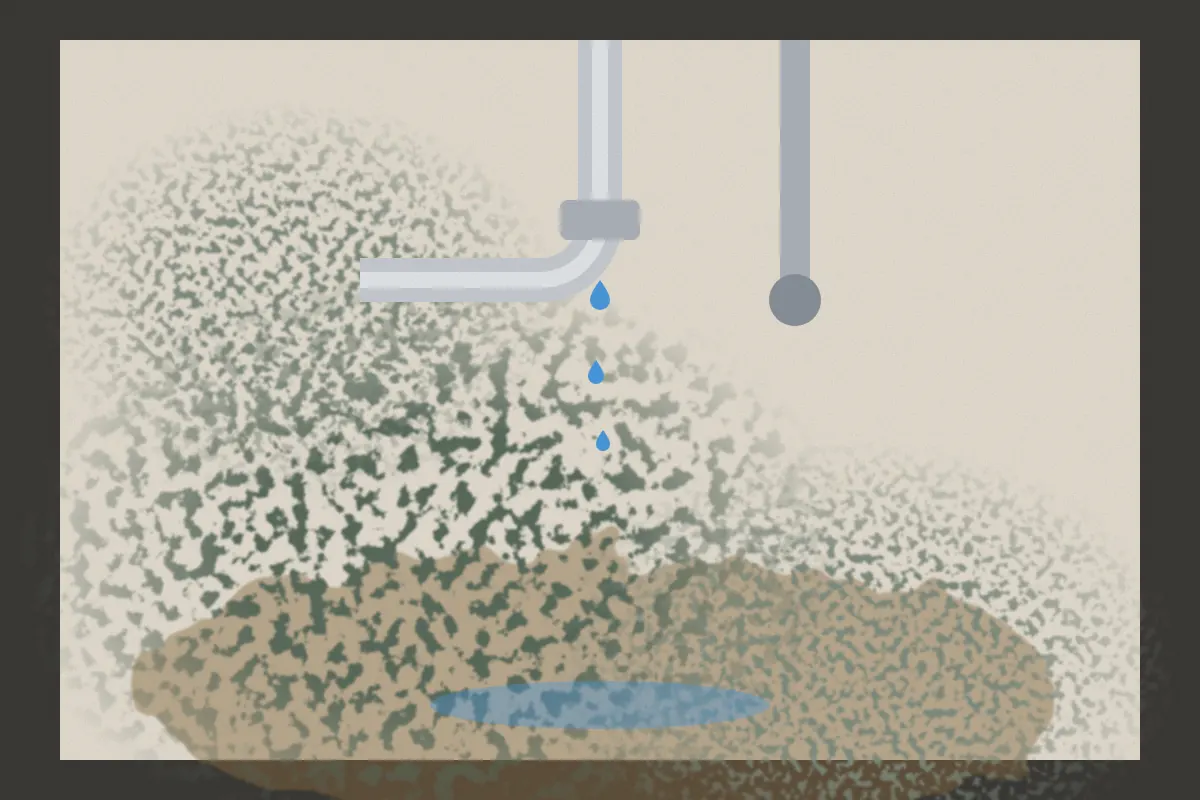
Mold around the toilet and tub
Dark mold at the base of the toilet, or soft flooring around it, often means a failed wax ring or a leaking supply line. Mold along the bottom of the tub or shower can mean water is getting past the caulk or through cracked grout. These leaks can rot the subfloor, so have them checked rather than just cleaning the surface.
Mold on the bathroom ceiling
Mold on the ceiling is usually caused by steam condensing on a cool surface. It often means the fan is too weak, is not vented outside, or is not run long enough. Clean small areas, then fix the ventilation. If spots return quickly, the ceiling may need a mold resistant primer and paint after the cause is fixed.
How to prevent bathroom mold
- Run the exhaust fan during showers and for 20 to 30 minutes after
- Make sure the fan vents outside, not into the attic
- Squeegee shower walls and glass after use
- Hang towels and bath mats to dry
- Keep grout sealed and caulk in good condition
- Fix drips and running toilets quickly
When to call a professional
Call a mold removal company when mold covers a large area, is inside walls or under flooring, or keeps coming back. If a leak is the cause, a plumber should fix it first. For a full solution, some homeowners replace an old shower with a new, properly waterproofed one. Read about bathroom remodeling and mold removal.
Bathroom fan tips
- A fan that cannot hold a sheet of tissue against its grille is too weak or blocked
- Clean the fan grille and housing once or twice a year
- Consider a humidity sensing fan that runs automatically
- Leave the door open after showers to help air circulate

Quick answers
Why does my bathroom keep getting mold?
Usually steam and poor ventilation, or water getting behind tiles and caulk. Mold that returns quickly often means a leak.
How do I get rid of bathroom mold?
Clean tile and grout with a suitable cleaner, replace moldy caulk and improve ventilation. Call a professional for mold on drywall or inside walls.
Is bathroom mold dangerous?
It can irritate people with allergies or asthma. Surface mold is usually easy to clean, but hidden mold needs attention.
How long should I run the bathroom fan?
During the shower and for about 20 to 30 minutes afterwards.
Who fixes bathroom mold?
A mold removal company for the mold, a plumber for any leak, and a bathroom remodeler if the shower needs rebuilding.
Related
This guide covered bathroom mold. For more background, see the EPA’s mold guide, and if you need help, Sifixit can connect you with a local provider.
This guide is general information for homeowners, not professional, insurance or safety advice for your situation.
More helpful guides
- Mold under carpet: signs and what to doHow to tell if mold is growing under your carpet, why it happens, and whether the carpet can...
- Mold in a rental home: what tenants and landlords should knowTenants should report mold and any leak to the landlord in writing, with photos, and keep a copy.
- Mold on windows and window sills: causes and preventionMold on windows usually comes from condensation: warm, damp indoor air hits cold glass and frames, and water...
- Mold in AC vents and air ducts: signs and what to doDark spots on vent covers, a musty smell when the air conditioning runs and allergy symptoms that worsen...
- Do I need mold testing? When it helps and when it does notIf you can see or smell mold, you usually do not need testing to know it must be...
- Mold vs mildew: how to tell the differenceMildew is a type of mold that grows flat on the surface, usually white, gray or yellow, and...