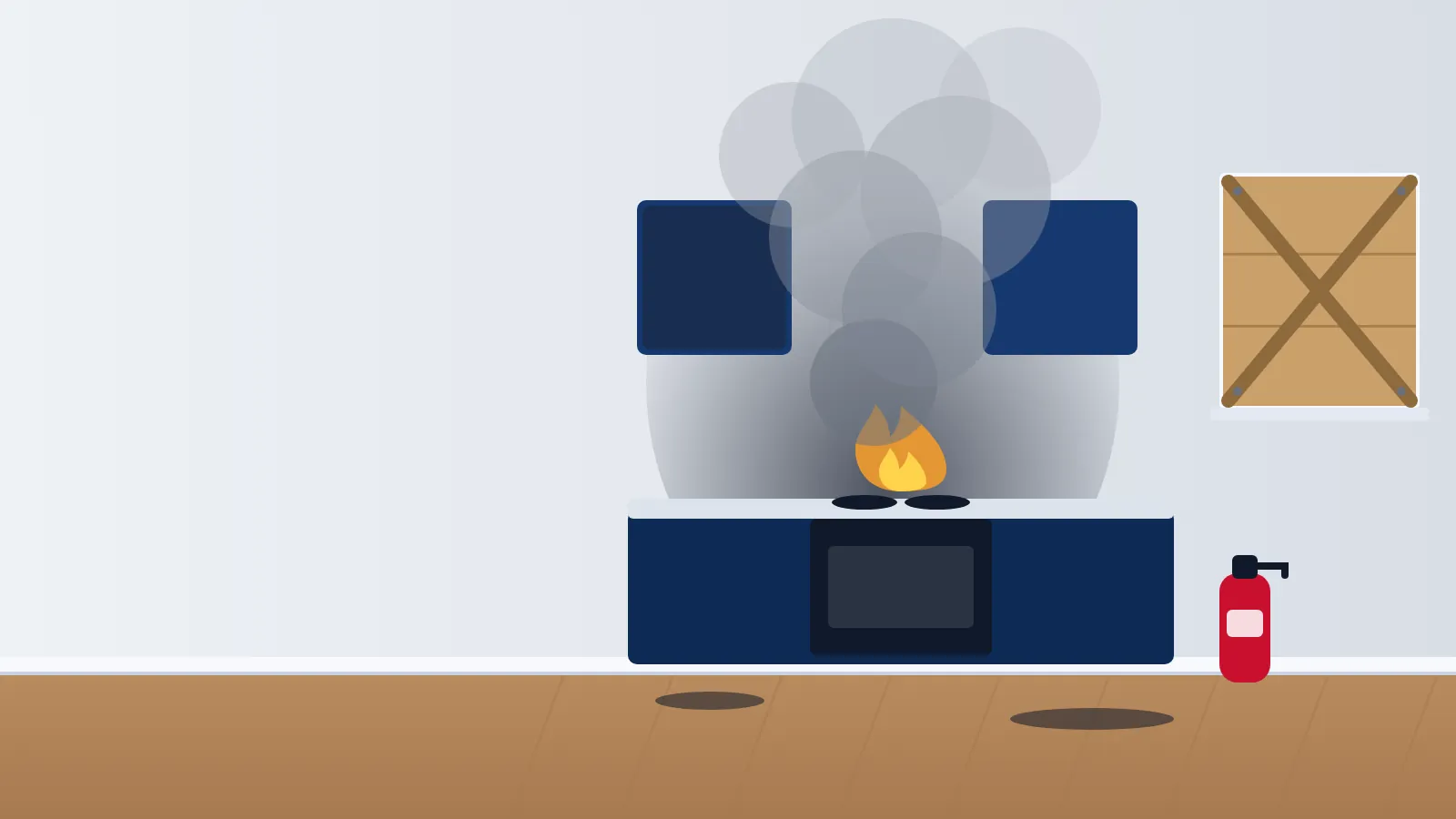
A house fire does not stop doing damage when the flames go out. Smoke and soot settle into walls, ceilings, fabrics and air ducts, and the water used to put the fire out soaks into floors and drywall. Acting quickly limits how much has to be thrown away.
Sifixit is a free referral service. Call the number on this page and you will be connected with a local fire damage restoration provider where one serves your area. Calling costs nothing and you are never obliged to hire anyone.
When fire damage is an emergency
The first priority after a fire is safety, not cleanup. A home can look calm while the structure, the wiring or the gas supply is still dangerous.
If there is any fire, smoke or smell of gas, get everyone out and call 911. Do not go back inside until the fire department tells you it is safe.
- Wait for the fire department to confirm the home is safe to enter.
- Do not switch on lights, appliances or the heating and cooling system until the wiring has been checked.
- Take photos and video of every room before anything is moved or cleaned.
- Do not eat or drink anything that was near the fire, heat, smoke or soot.
- Call your insurance company as early as you can and note the claim number.
- Keep children and pets out of the damaged area.
What we can connect you with
Fire damage restoration is usually several jobs done in order. When you call, describe what burned, where the smoke went and whether water was used to put the fire out.
Emergency board up and tarping
Broken windows, damaged doors and holes in the roof are covered to keep out weather, animals and intruders while the home is empty.
Smoke and soot cleanup
Soot is acidic and can stain and etch surfaces if it is left too long. Providers remove it with dry sponges, vacuums and cleaning methods matched to each surface.
Smoke odor removal
Smoke smell sinks into drywall, insulation, carpet and air ducts. Removing it can involve deep cleaning, sealing surfaces and specialist deodorizing equipment.
Water removal after firefighting
Fire hoses leave a lot of water behind. It is pulled out and the structure is dried, the same way as any other water damage job.
Contents cleaning and pack out
Furniture, clothing, documents and electronics can often be cleaned. Some providers pack them out and clean them away from the home.
Repairs after cleanup
Once cleaning and drying are finished, burned or badly stained materials such as drywall, flooring and cabinets are replaced.
Signs you need a professional
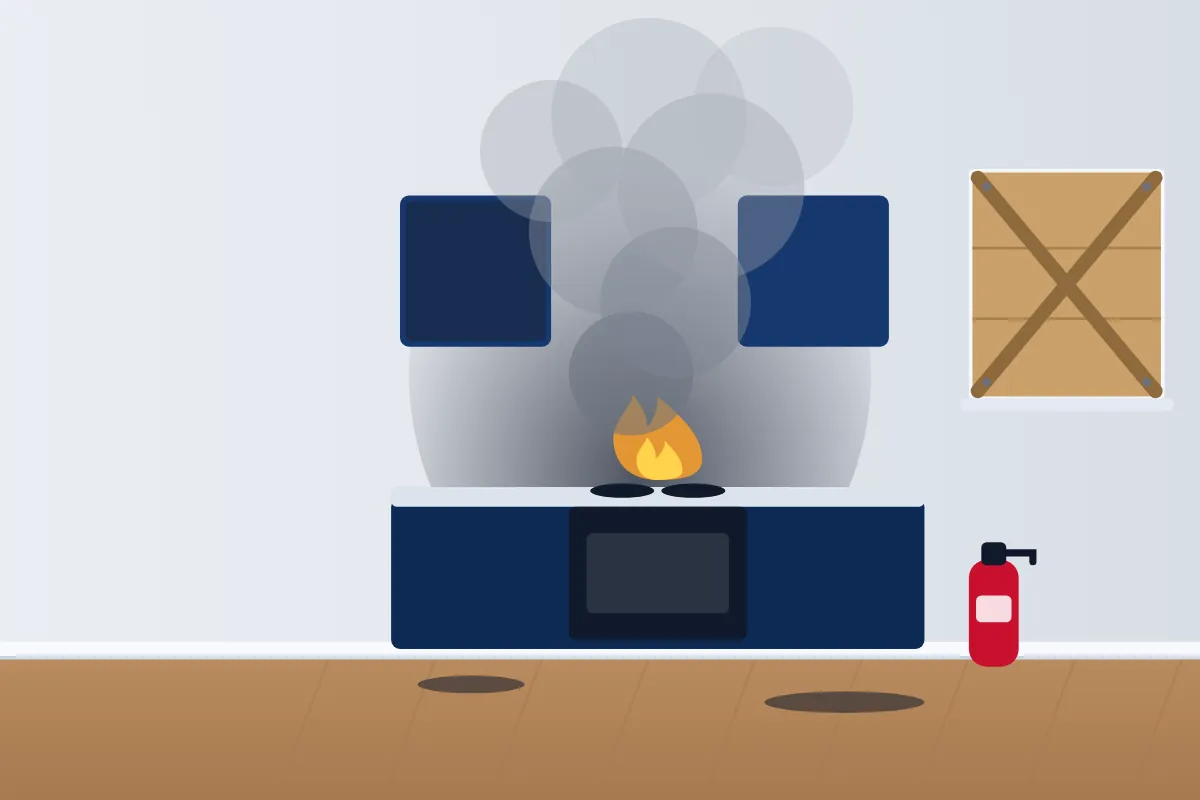
Even a small kitchen fire can leave damage that is easy to miss, because smoke travels well beyond the room where the fire started.
- Black or brown soot on walls, ceilings or light fixtures
- A smoke smell that comes back after you clean and air the room
- Yellow or gray staining on paint, grout or plastic surfaces
- Wet drywall, carpet or flooring left by firefighting water
- Smoke residue in rooms far away from where the fire started
- A burnt smell when the heating or cooling system runs
The three kinds of smoke residue
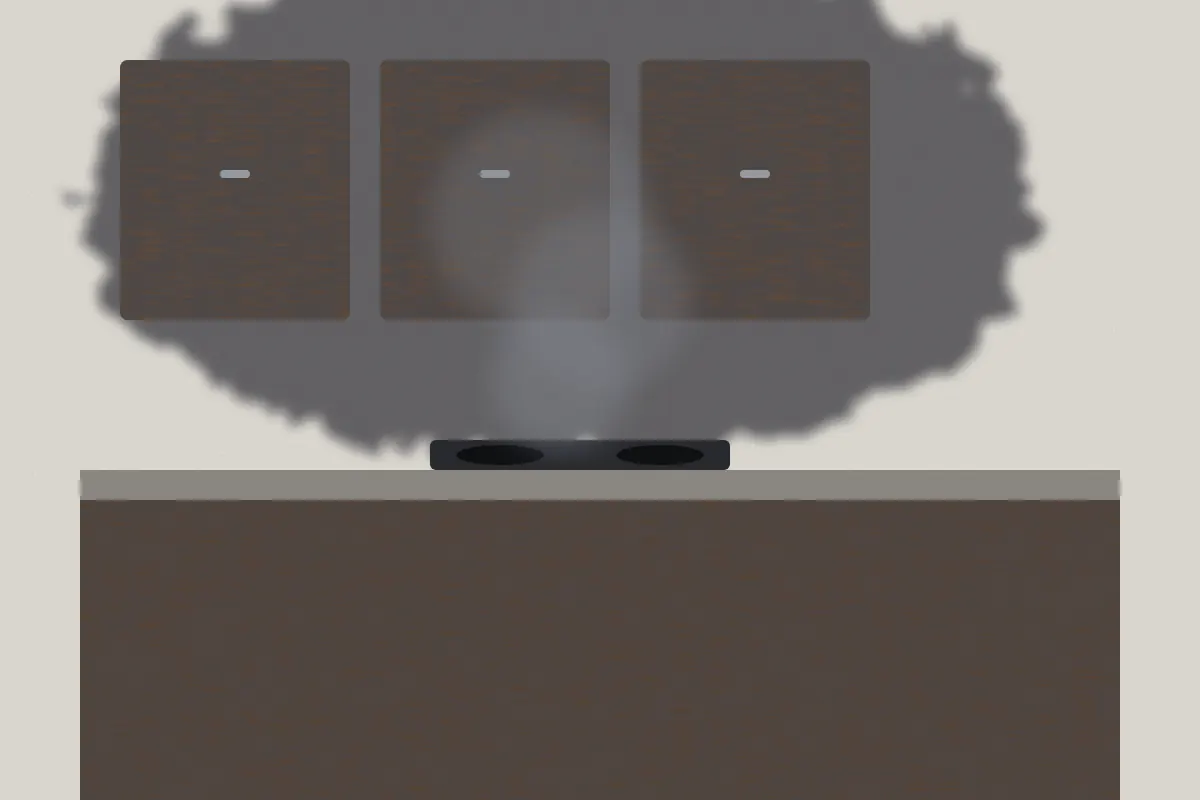
What burned, and how hot the fire was, decides the kind of residue left behind. Each one is cleaned differently, which is why a quick wipe often makes things worse.
Dry smoke
Left by fast, hot fires burning wood or paper. The residue is powdery and easier to remove, but it gets into cracks and small gaps.
Protein residue
Left by kitchen fires where food burned. It can be almost invisible, yet it discolors paint and leaves a very strong smell.
Wet smoke
Left by slow, smoldering fires burning plastic or rubber. The residue is sticky and smears easily, and it needs specialist cleaning.
Wiping soot with a damp cloth or a household cleaner can push it deeper into the surface. It is usually better to leave it alone until the right method is chosen.
What affects the cost
Every fire is different, so there is no single price. These are the things that change the size of the job.
- How much of the home was reached by flames, smoke or soot
- What burned, since plastics leave harder residue than wood
- How much water was used to put the fire out
- Whether the heating and cooling ducts need cleaning
- How many belongings need cleaning or pack out
- Whether drywall, insulation or flooring must be replaced
- Whether the home needs board up or roof tarping
- Whether your insurance covers the loss and how much
Ask every provider for a written scope that lists each stage of the work and what is not included. Fire claims are often large, so get any change in writing before the extra work starts.
What to do while you wait
Once the fire department says the home is safe to enter, these steps help protect what is left and support your insurance claim.
- Keep a written list of damaged items as you find them
- Keep receipts for hotels, meals and other costs while you are out of the home
- Open windows for fresh air if the weather is dry and the home is secure
- Cover clean furniture with sheets so soot does not settle on it
- Do not wash smoky clothes in hot water, which can set the smell
- Remove valuables and important papers if you can reach them safely
Handle it yourself or call a pro
Usually fine to handle yourself
- A small pan fire with light residue on one stove top
- Airing out a faint smell that clears within a day
- Washing a few smoky clothes on a normal cycle
- Cleaning a single scorch mark on a hard surface
Time to call a professional
- Soot has settled on walls or ceilings in any room
- The smell returns after cleaning and airing
- Water was used to put the fire out
- Smoke reached rooms away from the fire
- You plan to make an insurance claim
Soot can irritate the lungs, especially for children, older people and anyone with asthma. If you have to handle soot yourself, wear gloves and a well fitting mask and keep the area aired.
Questions to ask before you hire
- Are you licensed for this work in my state? Ask for the number so you can look it up.
- Are you insured? Ask to see the certificate rather than taking a yes on the phone.
- Do you handle board up, cleaning, odor removal and repairs, or only some of them?
- How will you remove the smoke smell, and how will we know it has worked?
- Will you work with my insurance company and document the damage for the adjuster?
- What warranty do you give on the work, and is it in writing?
Frequently asked questions
Does home insurance cover fire damage?
Most standard homeowners policies cover accidental fire, but the limits and details vary. Many policies also pay for somewhere to stay while the home is repaired. Read your policy, call your insurer early and keep every receipt.
How soon can cleanup start?
Cleanup can start once the fire department has cleared the home and your insurer knows about the loss. Soot and water keep doing damage while they sit, so it helps to arrange board up and water removal early.
Can I stay in my home after a fire?
Not always. If the fire department, your utility company or a provider says the home is unsafe, or the power and water are off, you may need to stay elsewhere for a while. Ask before you move back in.
Will the smoke smell ever go away?
In most cases it can be removed, but it takes more than air freshener. The source has to be cleaned or replaced, and surfaces are sometimes sealed. Ask the provider how they will confirm the smell is gone.
Can smoke damaged belongings be saved?
Many can. Hard items, furniture, clothing and some electronics often respond well to specialist cleaning. Items that are burned, melted or soaked with dirty water are usually replaced.
Why is there water damage after a fire?
Firefighters use a lot of water, and it soaks into floors, walls and ceilings. That water needs removing and drying just like a burst pipe, otherwise mold can follow.
Does Sifixit do the restoration work?
No. Sifixit is a referral service. The work is done by independent local businesses, who are responsible for their own work, pricing, licensing and insurance.
Is calling free?
Yes. Calling and being connected costs you nothing. If you hire a provider, you pay that provider directly for the work.
Sifixit is a free referral service and does not provide home services. Calls may be answered by a partner call center or connected directly to independent local providers, who are solely responsible for their work, pricing, licensing and insurance.