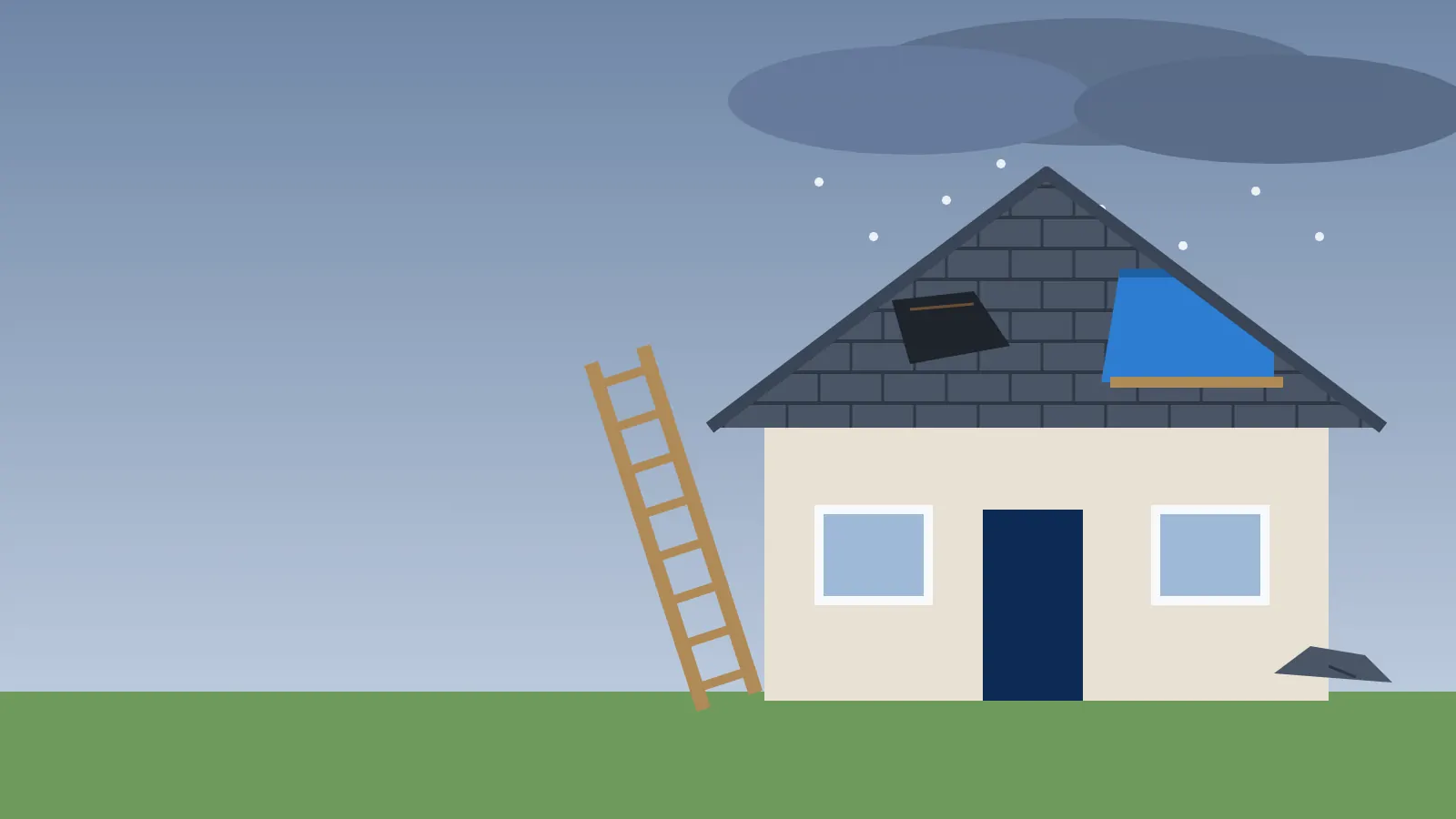
Your roof takes the full force of every storm, every heat wave and every hail shower. When it fails, water gets into the attic, the ceilings and the walls, and a small leak can turn into a large repair. Whether you need a quick repair after a storm or a full replacement, the first step is the same.
Sifixit is a free referral service. Call the number on this page and you will be connected with an independent local roofing provider where one serves your area. Calling costs nothing and you are never obliged to hire anyone.
When a roof problem is urgent
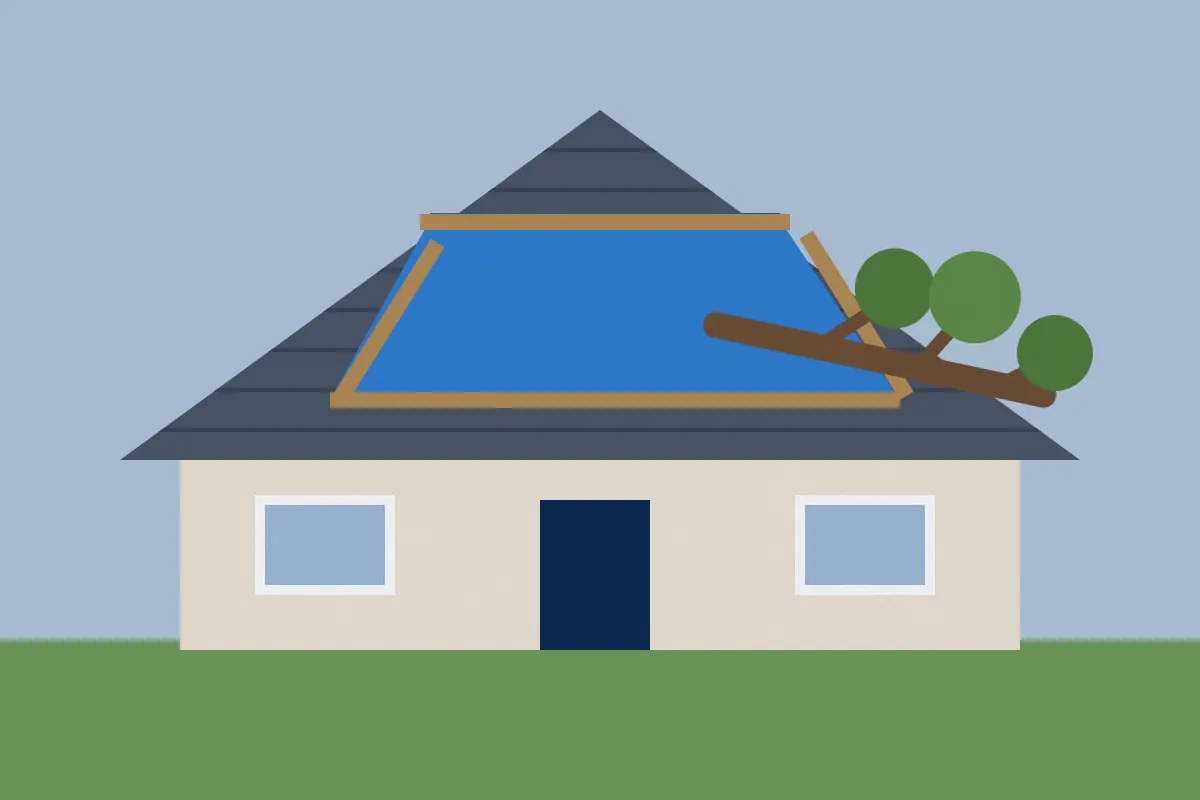
Treat a roof problem as urgent when water is coming inside, when a storm has torn off shingles or opened the roof, or when a tree or large branch has landed on it.
Never climb onto a roof during wind, rain or ice, or when it is wet. If a tree has brought down power lines, stay well away and call 911 or your power company.
- Put buckets under drips and move belongings and furniture away
- Take photos of the roof, the ceilings and any damage inside
- Keep people out of rooms where a ceiling is sagging with water
- Ask a provider about an emergency tarp to keep rain out
- Call your insurance company early and note the claim number
What we can connect you with
Roofing covers several kinds of work. When you call, describe what you can see, how old the roof is and whether water is getting inside.
Roof repair
Fixing leaks, replacing missing or damaged shingles, and repairing flashing around chimneys, vents and skylights.
Roof replacement
Removing the old roof and installing a new one when repairs are no longer worth it or the roof has reached the end of its life.
Storm and hail damage
Inspecting the roof after a storm, documenting damage for insurance and making repairs.
Emergency tarping
Covering a damaged roof with a tarp to keep rain out until permanent repairs can be made.
Flat roofs
Repair and replacement of low slope roofs, which are common on garages, additions and some homes.
Gutters and ventilation
Making sure water drains away from the roof and the attic is ventilated so the roof lasts longer.
Signs your roof needs attention
Many roof problems start small. Look for these signs from the ground and inside the attic.
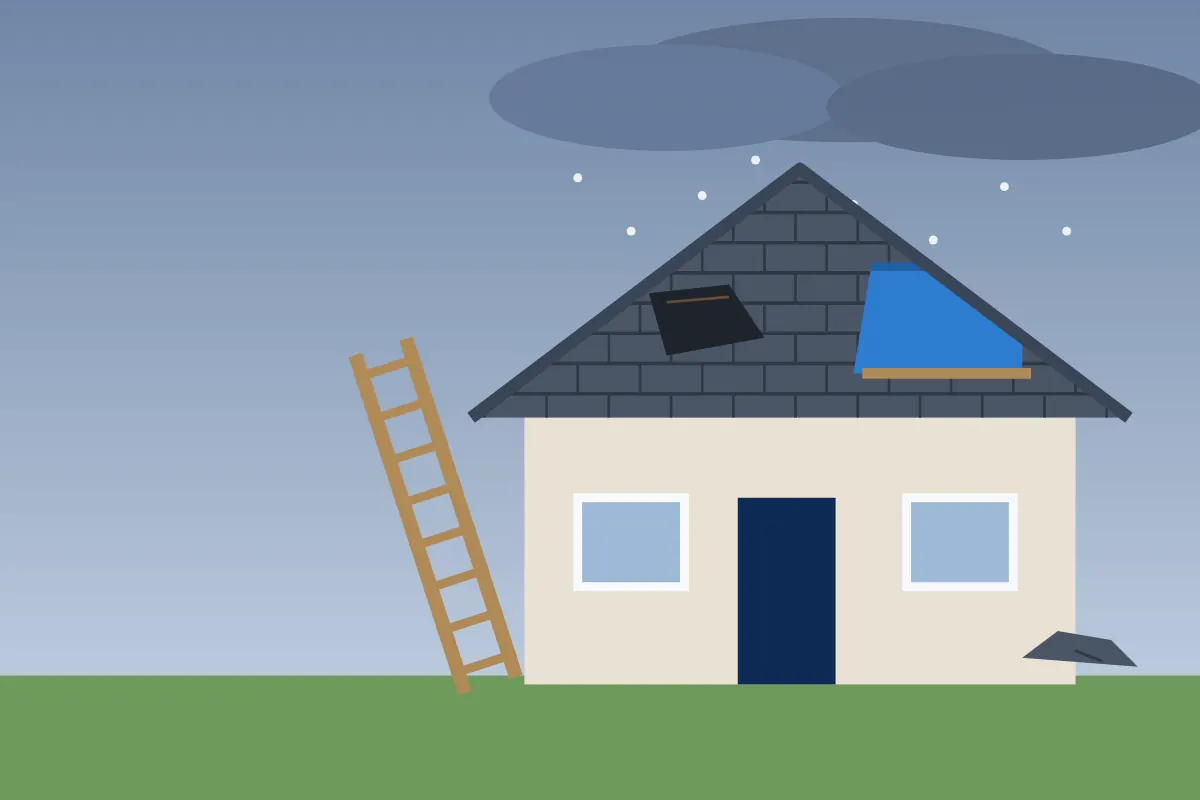
- Missing, cracked or curling shingles
- Granules from shingles collecting in gutters
- Water stains on ceilings or in the attic
- Daylight showing through the roof boards
- Sagging areas along the roof line
- Damaged flashing around chimneys and vents

Common roof types
The kind of roof you have changes how it is repaired, how long it lasts and what a new one involves.
Asphalt shingles
The most common roof on American homes. Affordable, and often lasts around 20 to 30 years depending on climate and quality.
Metal and tile
Metal and clay or concrete tile roofs usually last longer, but repairs need a provider who works with that material.
Flat roofs
Low slope roofs use membranes such as TPO or EPDM. They need good drainage, because standing water shortens their life.
What affects the cost
There is no single price for roofing work, because every roof is different. These are the things that change the size of the job.
- The size and steepness of the roof
- The roofing material
- How many layers must be torn off
- Whether the roof boards underneath are damaged
- Flashing, vents and skylights that need work
- Permits required in your area
- Whether insurance covers storm damage
- Access to the roof and the home
Ask every provider for a written quote that lists the work, the materials and what is not included, and get any change in writing before extra work starts.
Handle it yourself or call a pro
Usually fine to do yourself
- Look at the roof from the ground with binoculars
- Clear leaves from gutters you can reach safely from a ladder
- Check the attic for stains and damp insulation
- Take photos after every big storm
Time to call a professional
- Any work that means walking on the roof
- Missing shingles or storm damage
- Water coming into the home
- A roof that is sagging or soft
- A roof near the end of its life
Falls from roofs and ladders cause serious injuries every year. Leave anything that means climbing onto the roof to a professional with the right safety equipment.
Questions to ask before you hire
- Are you licensed and insured for roofing work in my state? Ask for proof.
- Will you give me a written quote that lists the materials and the work?
- Do you pull the permit, and is it in the price?
- What warranty do you give on your work, and what does the manufacturer cover?
- Will you document storm damage for my insurance company?
- Who cleans up nails and debris when the job is finished?
Frequently asked questions
How do I know if my roof needs repair or replacement?
Small, isolated damage on a roof with plenty of life left is usually repaired. Widespread damage, repeated leaks or a roof near the end of its life often makes replacement the better choice. Ask for an inspection and a written explanation.
Does home insurance cover roof damage?
Sudden damage from a storm, hail or a falling tree is often covered. Wear and tear on an old roof usually is not, and some policies pay less for older roofs. Check your policy and call your insurer early.
How long does a new roof last?
It depends on the material and the climate. Asphalt shingle roofs often last around 20 to 30 years, while metal and tile roofs usually last longer.
Should I be careful of storm chasers?
Yes. After big storms, some out of town contractors go door to door. Check any roofer’s license, insurance and local address, and never sign a contract on the spot. In some states, including Texas, it is illegal for a contractor to offer to pay or waive your insurance deductible.
Can a new roof go over the old one?
Sometimes. Building codes usually limit roofs to two layers of shingles, and removing the old layer lets the provider check the roof boards underneath. Ask what they recommend and why.
Do I need a permit for a new roof?
In many areas, yes. A roof replacement often needs a permit from the local building department. Ask the provider whether they pull it.
Does Sifixit do the roofing work?
No. Sifixit is a referral service. The work is done by independent local businesses, who are responsible for their own work, pricing, licensing and insurance.
Is calling free?
Yes. Calling and being connected costs you nothing. If you hire a provider, you pay that provider directly for the work.
Sifixit is a free referral service and does not provide home services. Calls may be answered by a partner call center or connected directly to independent local providers, who are solely responsible for their work, pricing, licensing and insurance.