Short answer: Most siding can be cleaned with a soft brush on a long pole, a garden hose and a mild detergent solution, working from the bottom up and rinsing from the top down. Use a pressure washer only on low settings and never aim upward under the laps, which forces water behind the siding.
Dirt, pollen, mildew and algae build up on siding over time, especially on shaded walls. Cleaning it once a year keeps your home looking good and helps you spot damage early. This guide explains how to clean siding safely without damaging it.
What you need
- A soft bristle brush on an extension pole
- A garden hose with a spray nozzle
- A bucket of water with mild detergent or a siding cleaner
- Gloves and eye protection
- Plastic sheeting to protect plants

Step by step
- Close windows and doors, and cover plants, outlets and light fixtures.
- Wet nearby plants with plain water to protect them.
- Rinse a section of siding from the top down.
- Scrub with the detergent solution from the bottom up, which prevents streaks.
- Rinse from the top down before the solution dries.
- Work in sections, and on a cloudy day or in shade so cleaner does not dry too fast.
Stay off ladders on windy days, and do not use a ladder near power lines. Hire a professional for high walls.
Removing mildew and algae
Green and black streaks on shaded walls are usually mildew or algae. A siding cleaner made for mildew, or a mild solution recommended by your siding manufacturer, works well. Rinse thoroughly. Never mix bleach with ammonia or other cleaners.
Should you pressure wash siding?
It can save time, but it can also damage siding if used wrong. Use a low pressure setting and a wide tip, keep the nozzle a few feet away, and always spray downward at an angle, never upward under the laps. High pressure can crack vinyl, strip paint from fiber cement and wood, and push water into walls. Many manufacturers recommend against high pressure washing, so check your warranty.

Cleaning by siding type
- Vinyl: soft brush and mild detergent. Avoid harsh solvents and abrasive pads.
- Fiber cement: soft brush and water, following the manufacturer’s guidance to protect the paint.
- Wood: gentle cleaning only. Check for peeling paint and rot.
- Brick and stucco: low pressure only, since high pressure can erode mortar and stucco.
Preventing dirt and mildew
- Trim shrubs and trees back from the walls so siding can dry
- Keep sprinklers from spraying the house
- Clean gutters so water does not spill down the walls
- Keep mulch and soil a few inches below the bottom of the siding
- Wash shaded walls more often
Check for damage while you clean
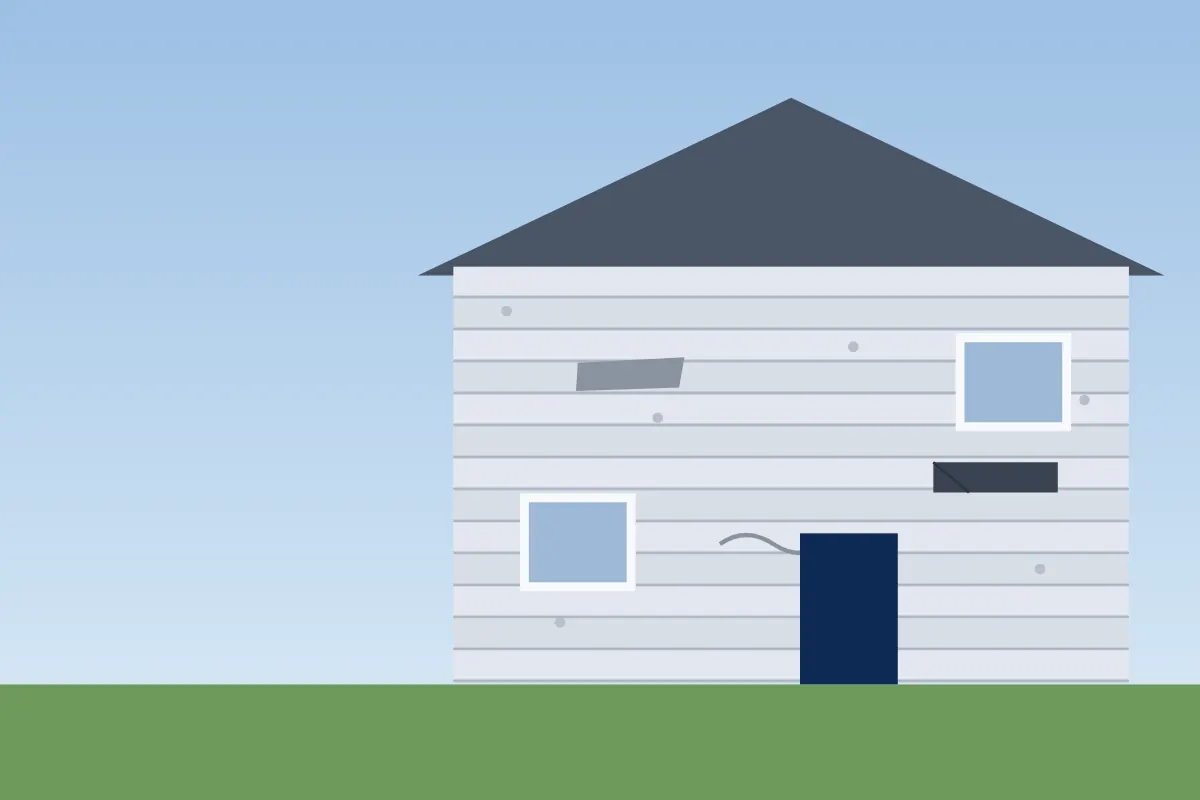
- Cracked, loose or missing pieces
- Soft spots and rot at the bottom of walls
- Gaps around windows and doors
- Peeling paint on fiber cement or wood
- Hail dents and holes

If you find damage, read about siding repair.
Quick answers: how to clean siding
How do I clean siding without a pressure washer?
Use a soft brush on a pole, a hose and mild detergent. Scrub bottom up and rinse top down.
Can I pressure wash vinyl siding?
Only on a low setting, spraying downward. High pressure can crack it and force water behind it.
How do I remove green algae from siding?
Use a siding cleaner made for mildew and algae, scrub gently and rinse well.
How often should I clean my siding?
Once a year for most homes, and more often on shaded or damp walls.
Who can clean or repair high siding?
A siding contractor. Sifixit can connect you with a local provider for repairs.
Related
This guide covered how to clean siding. For more background, see the FTC’s advice on hiring a contractor and avoiding home improvement scams, and if you need help, Sifixit can connect you with a local provider.
This guide is general information for homeowners, not professional, insurance or safety advice for your situation.
More helpful guides
- Vinyl vs fiber cement siding: which is betterVinyl siding costs less, installs faster and never needs painting, but it can crack in cold, fade in...
- When to repair or replace sidingRepair when damage is limited to a few panels or boards and the rest of the siding is...