Short answer: Turn off the power or gas to the water heater, shut the cold water supply valve on top, and keep people away from hot water. Then find where the leak is coming from. Leaks from pipes and valves can often be repaired, but a leak from the bottom of the tank usually means the tank has failed and needs replacing.
A water heater leaking can be a small drip or a flood. Either way, acting quickly protects your floors and keeps everyone safe. This guide explains what to do, how to find the source, and when to repair or replace.
Do this first
- Turn off the power: switch off the breaker for an electric heater, or set a gas heater’s control to off or pilot.
- Shut the cold water supply valve on the pipe going into the top of the heater.
- Keep children and pets away, since water from the tank can be very hot.
- Move belongings away and start soaking up water.
- If water keeps coming, attach a hose to the drain valve at the bottom and drain the tank to a floor drain or outside.
If you smell gas near a gas water heater, leave the home and call your gas company or 911 from outside.
Find where the leak is coming from
- Supply connections on top: loose fittings or corroded pipes can often be tightened or replaced.
- Temperature and pressure relief valve: a valve on the side that drips may be doing its job because pressure or temperature is too high, or it may be faulty. Have a plumber check it.
- Drain valve at the bottom: may drip if not closed fully or worn out, and can be replaced.
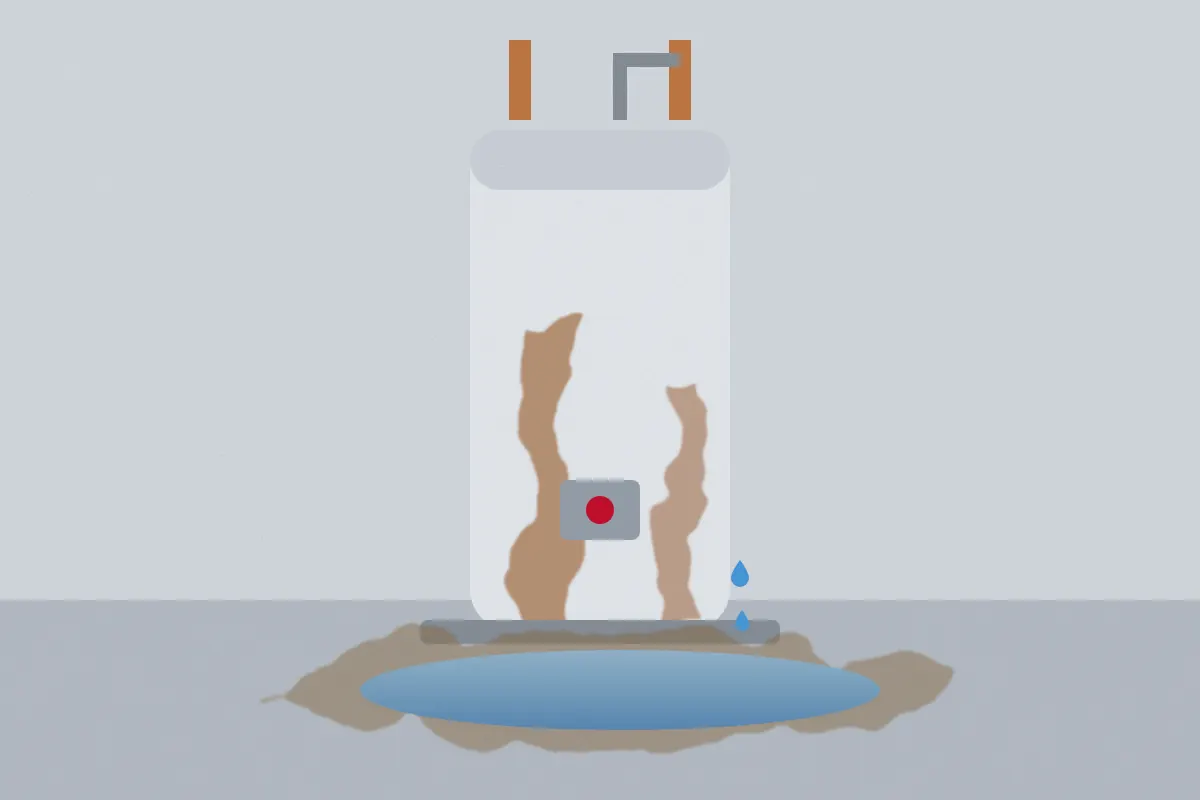
- The tank itself: water from under the tank, rust streaks or a wet base usually mean the inner tank has corroded through.
Repair or replace?
Leaks from fittings and valves are usually repairable. A leak from the tank body is not, and the heater needs replacing. Many tank water heaters last around 8 to 12 years. Hard water, high pressure and skipped maintenance can shorten that. If your heater is near the end of its life, replacement often makes more sense even for smaller repairs.
Signs your water heater is failing
- Rusty or discolored hot water
- Rumbling or popping sounds from sediment
- Water that does not get as hot as before
- Moisture or rust around the base
- A heater more than 10 years old
What to expect when replacing a water heater
Replacing a tank water heater usually takes a few hours. The plumber drains and removes the old unit, sets the new one, connects water, gas or electric and venting, installs a new relief valve and often an expansion tank if local code requires it, then fills and tests it. Most cities require a permit. Ask about disposal of the old heater and the warranty on the new one.
Preventing leaks
- Flush the tank once a year to remove sediment
- Have the anode rod checked, which protects the tank from corrosion
- Keep the temperature around 120 degrees Fahrenheit unless your plumber advises otherwise
- Test the relief valve once a year
- Install a drain pan and a leak alarm under the heater
Read about water heater repair and replacement and our guide to tankless vs tank water heaters.
Quick answers: water heater leaking
What should I do if my water heater is leaking?
Turn off power or gas, shut the cold water supply valve, keep people away from hot water and call a plumber.
Can a leaking water heater be repaired?
Leaks from fittings and valves often can. A leak from the tank itself means the heater needs replacing.
Is a leaking water heater dangerous?
It can cause scalding and water damage, and gas heaters need care. Turn off power or gas first.
How long do water heaters last?
Many tank water heaters last around 8 to 12 years, depending on water quality and maintenance.
Who fixes a leaking water heater?
A licensed plumber. Sifixit can connect you with a local plumber.
Related
- Water heater repair and replacement
- Plumbing near you
- Tankless vs tank water heater
- How to shut off the main water valve
This guide covered water heater leaking. For more background, see the EPA’s WaterSense program, and if you need help, Sifixit can connect you with a local provider.
This guide is general information for homeowners, not professional, insurance or safety advice for your situation.
More helpful guides
- High water bill with no leak in sightWhy your water bill suddenly went up, how to test for a hidden leak with your meter, and...
- How to thaw a frozen pipe safelyHow to find and safely thaw a frozen water pipe, what never to use, and how to tell...
- Sewer smell in the house: causes and fixesThe most common reasons a house smells like sewage, simple fixes you can try, and when to call...
- No hot water? What to check before you call a plumberFor an electric water heater, check the breaker and the reset button on the heater.
- Running toilet: causes and how to fix itA running toilet is usually caused by a worn flapper, a chain that is too short or tangled,...
- Trenchless sewer repair vs traditional diggingTrenchless sewer repair fixes or replaces a sewer line through one or two small access holes instead of...