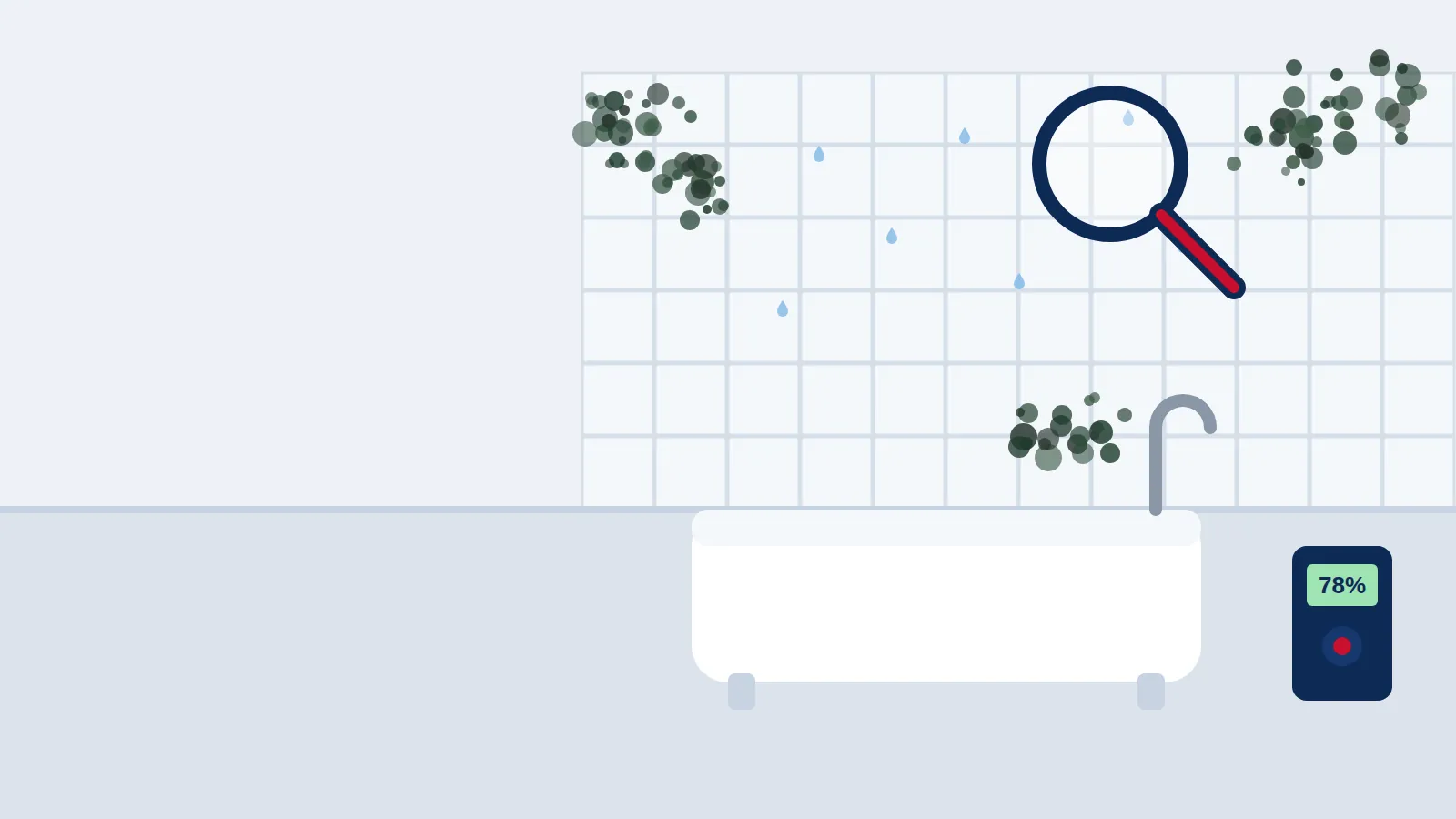
A mold inspection helps answer three questions: is there mold, how far has it spread, and what is causing it. Testing can be useful in some situations, but it is not always needed. Knowing when to inspect, and when to test, can save time and money.
Sifixit is a free referral service. Call the number on this page and you will be connected with an independent mold removal provider where one serves your area. Calling costs nothing and you are never obliged to hire anyone.
When a mold inspection makes sense
Consider an inspection in these situations.
- You smell mold but cannot see where it is
- There has been a leak or flood that may not have dried fully
- Mold keeps coming back after cleaning
- You are buying or selling a home
- You want to confirm that mold removal worked
- Someone in the home has symptoms that ease when they leave

What to do right now
If mold covers a large area, keep the room closed and avoid disturbing it until it has been inspected. Anyone with asthma or a weak immune system should stay away.
- Do not scrub or dry brush large patches, which spreads spores.
- Fix or stop any leak you can safely reach.
- Run a dehumidifier in damp rooms if you have one.
- Take photos of any visible mold and water damage.
- Write down when you first noticed the mold or smell.
- Call for an inspection.
What an inspection includes
Visual inspection
A careful look at walls, ceilings, floors, attics, crawl spaces and anywhere water may have reached.
Moisture readings
Meters and sometimes thermal cameras find damp areas inside walls and floors that are not visible.
Air sampling
Air samples compare indoor mold spores with outdoor air, which can point to hidden growth.
Surface sampling
Swab or tape samples from a surface can identify what kind of mold is growing there.

How testing and inspection usually work
- The inspector asks about leaks, smells and symptoms, then checks the home.
- Moisture readings show where water is or has been.
- Samples are taken only when they will help answer a question.
- Samples go to a laboratory for analysis.
- You receive a report with findings and recommendations for removal and moisture control.
Things worth knowing about testing
- The Environmental Protection Agency notes that if you can see or smell mold, sampling is usually not needed to decide on removal
- There are no federal limits for acceptable mold levels indoors
- Home test kits that grow mold in a dish usually show something, because mold spores are everywhere
- Some states, such as Texas and Florida, do not let the same company both assess and remove mold on the same project
- Ask the inspector what each test will tell you before you pay for it
Questions to ask before you hire
- Is an inspector license required in my state, and do you have one?
- Do you also remove mold, and if so, is that allowed on the same job?
- Which tests do you recommend, and why?
- Will I get a written report with photos and moisture readings?
- How soon will I get laboratory results?
Frequently asked questions
Do I need mold testing if I can see mold?
Usually not. Visible mold should be removed and the moisture problem fixed. Testing is more useful for finding hidden mold or confirming that removal worked.
What is clearance testing?
It is an inspection after mold removal to confirm the work is finished and the area is back to normal before walls are closed up.
Are home mold test kits worth it?
Most are of limited use. They almost always grow some mold, because spores are everywhere, so they do not tell you whether there is a problem.
How long does a mold inspection take?
A typical home inspection takes a few hours. Laboratory results for samples often take a few days.
Learn more
Our main mold removal guide covers the wider picture, including what affects the cost and when to call a professional.
Sifixit is a free referral service and does not provide home services. Calls may be answered by a partner call center or connected directly to independent local providers, who are solely responsible for their work, pricing, licensing and insurance.