Short answer: Hidden mold usually gives itself away with a musty smell, stains, peeling paint or walls that feel damp or soft, often near a past leak. A professional can confirm it with moisture readings and a small inspection hole.
Mold inside a wall grows out of sight, often for months. These are the signs to look for and what to do if you suspect it.
Signs of mold inside a wall
- A musty smell that is strongest near one wall
- Stains or discoloration on the wall surface
- Peeling, bubbling or cracking paint or wallpaper
- Drywall that feels damp, soft or warped
- A past leak from a pipe, roof, window or appliance
- Allergy like symptoms at home that ease when you leave
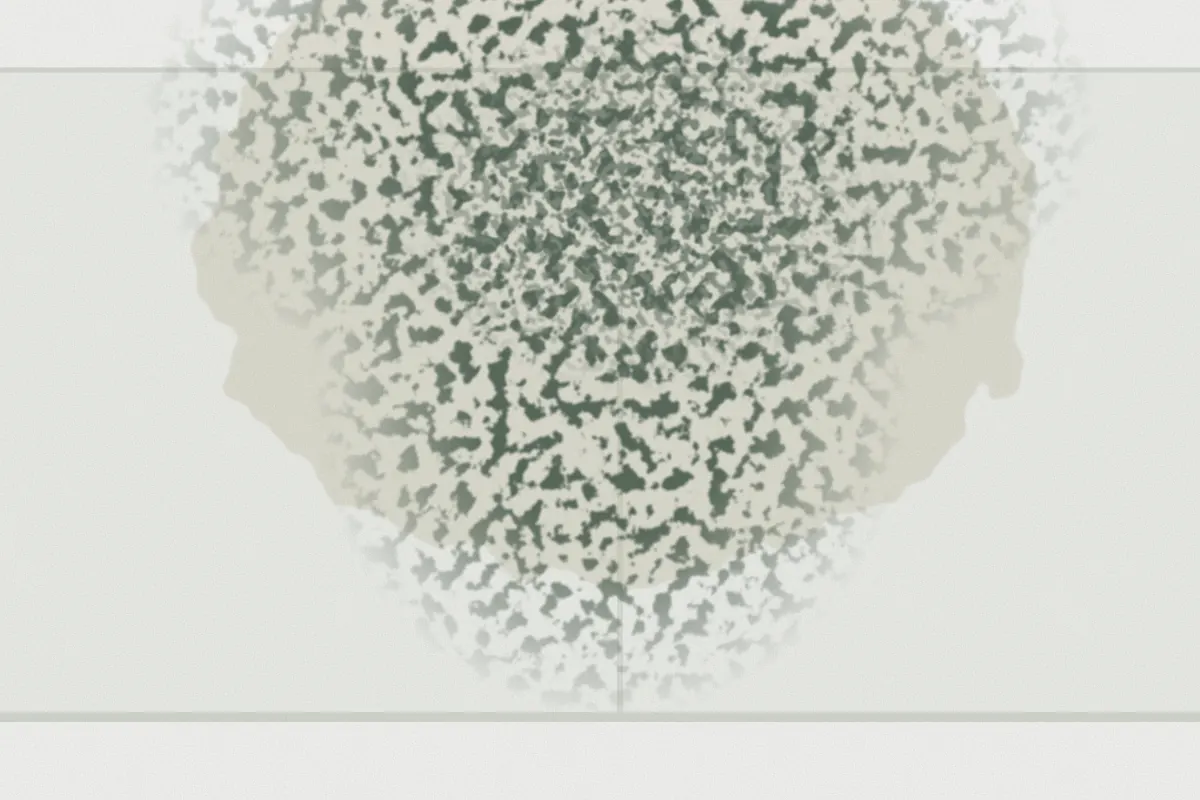
Where hidden mold is most common
- Walls behind showers, tubs and toilets
- Walls behind sinks, dishwashers and washing machines
- Outside walls with poor insulation that stay cold
- Below windows that leak or collect condensation
- Walls in basements and below ground rooms
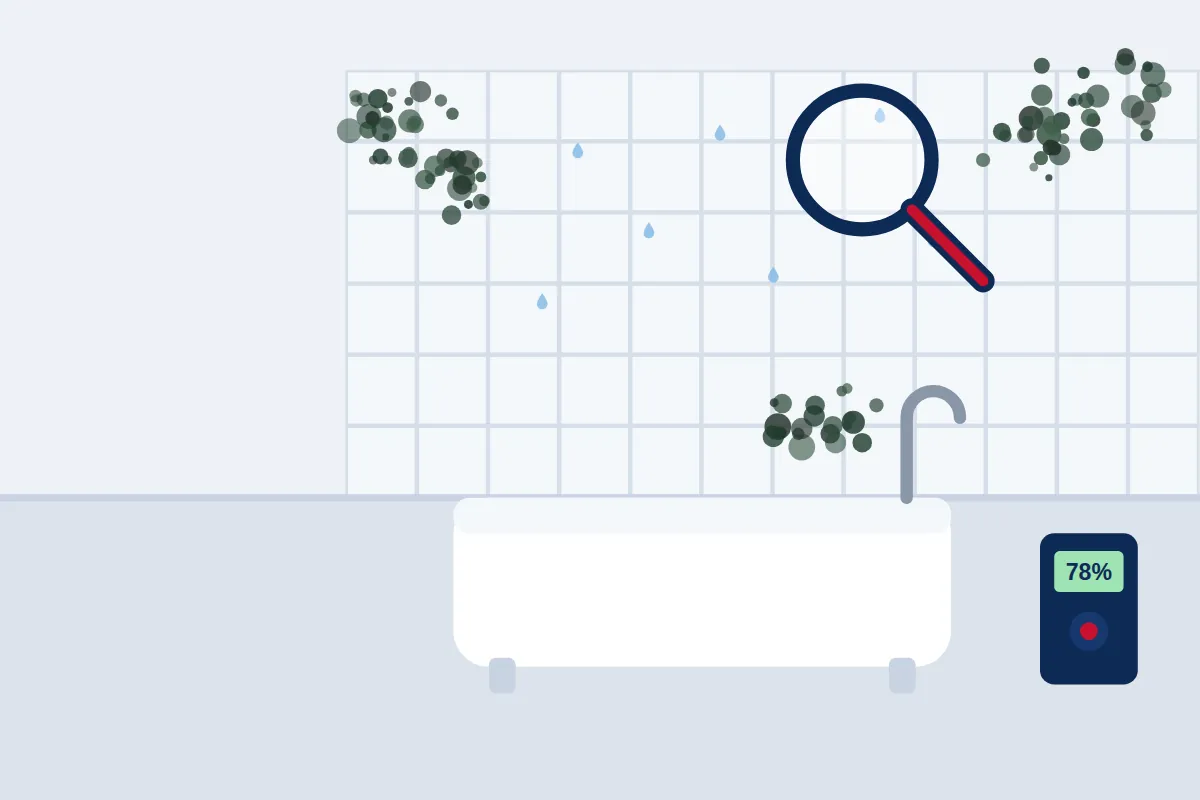
How professionals check behind walls
Good inspectors find hidden mold without tearing out walls.
- Moisture meters show damp areas inside the wall
- Thermal cameras can reveal cold, wet spots
- A small hole and a scope camera let them look inside
- Air sampling can show hidden growth in some cases
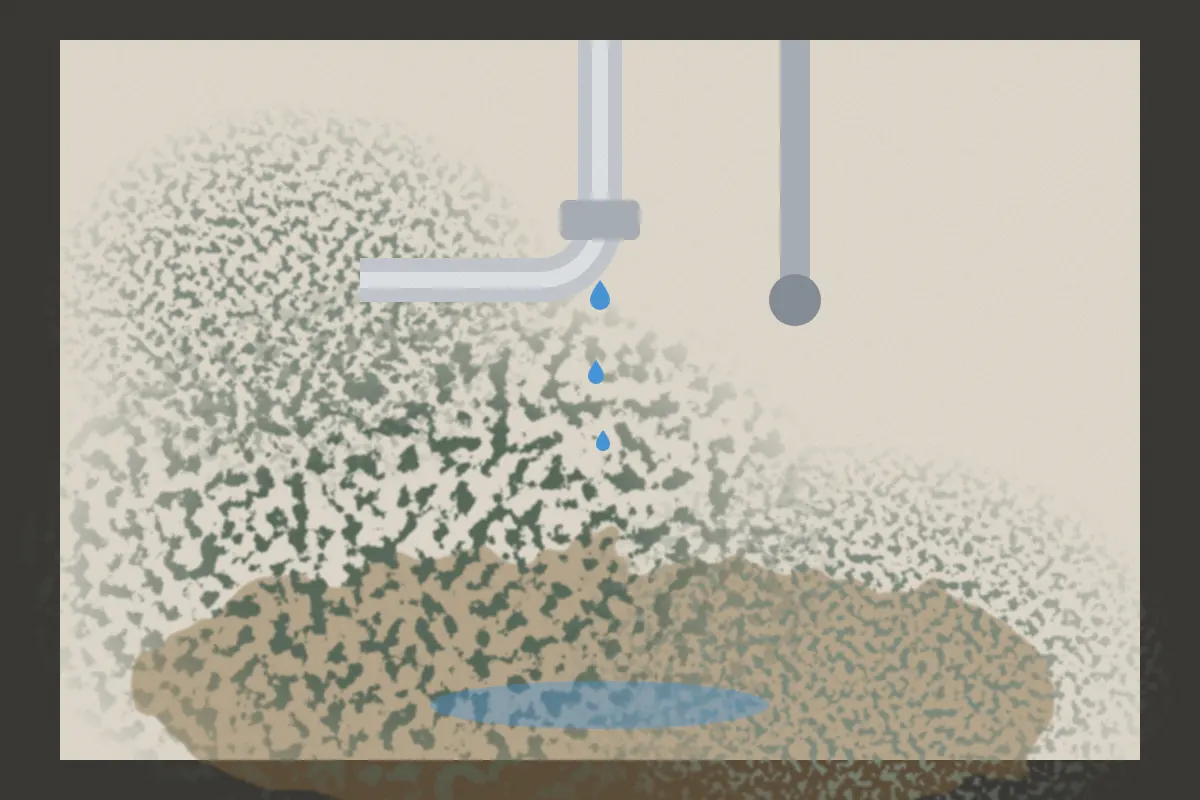
What not to do
Opening a moldy wall can spread spores through the home. Do not cut into a wall you suspect has mold without protection, and do not try to cover stains with paint.
Mistakes to avoid
- Painting over stains without fixing the moisture
- Spraying bleach on drywall, which does not reach mold inside
- Cutting into the wall without a mask and plastic sheeting
- Ignoring a musty smell because nothing is visible
- Leaving a leak unrepaired after cleaning
When to call a professional
Call a mold removal provider if you smell mold but cannot see it, if there has been a leak inside the wall, or if the affected area is larger than about 10 square feet, which the Environmental Protection Agency suggests is a job for professionals.
Frequently asked questions
Can mold grow inside walls without a leak?
Yes. High humidity and condensation on cold outside walls can feed mold, but most hidden mold follows a leak.
Is mold behind walls dangerous?
It can cause allergy symptoms and make asthma worse, and it shows there is a moisture problem damaging the wall.
Do I need mold testing?
Not always. Moisture readings and a visual check are often enough. Testing helps when the source is unclear.
Who fixes it?
A mold removal provider removes the mold, and the leak or moisture source must be fixed too.
Related
Read our mold removal guide and our page on mold inspection and testing.
Sifixit is a free referral service and does not provide home services. Calls may be answered by a partner call center or connected directly to independent local providers, who are solely responsible for their work, pricing, licensing and insurance.