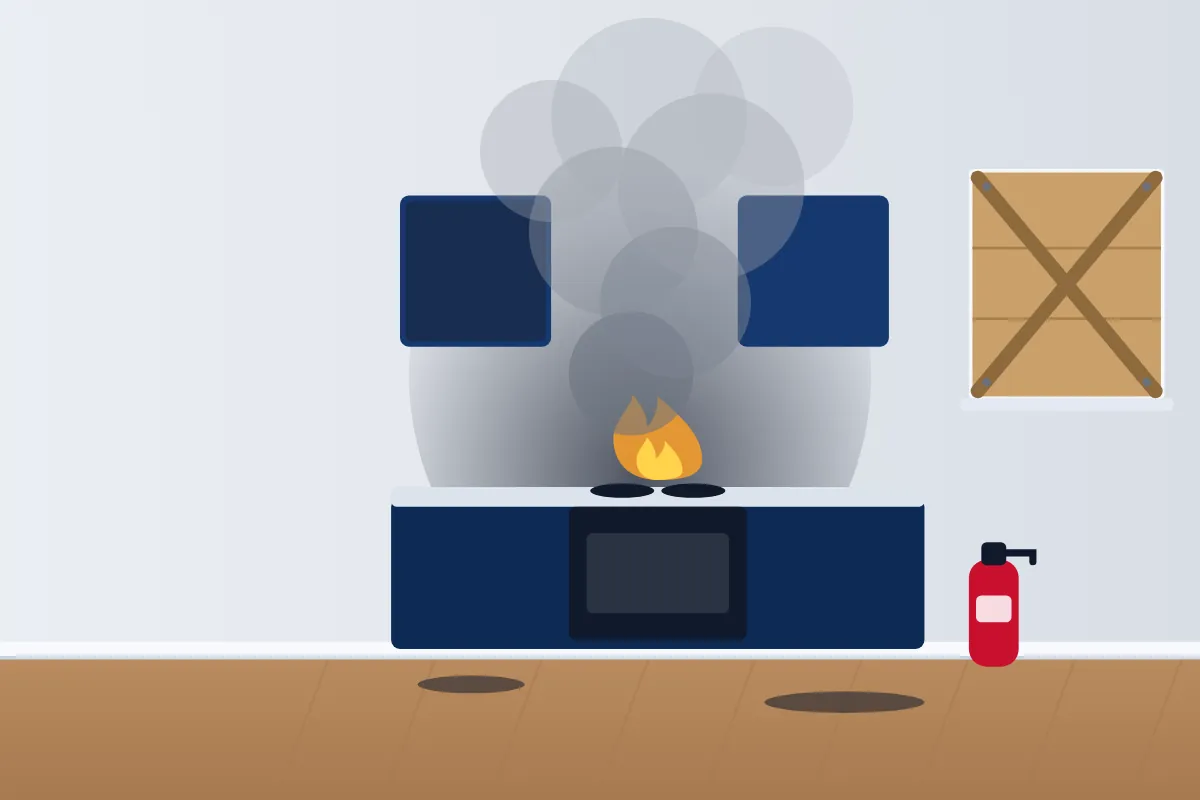
Short answer: Turn off the heat, then smother the flames by sliding a metal lid or baking sheet over the pan. For a very small fire, baking soda or salt can help. Never use water, never try to carry the pan outside, and never use flour. If the fire spreads or you are unsure, get everyone out and call 911.
Cooking is the leading cause of home fires, and grease fires are among the most dangerous. They spread fast and water makes them explode. Knowing what to do in the first seconds of a grease fire can prevent serious injury and damage.
Never throw water on a grease fire. Water sinks under the oil, turns to steam instantly and throws burning grease across the kitchen.
What to do
- Turn off the burner.
- Slide a metal lid or a baking sheet over the pan to cut off oxygen. Leave it in place until the pan has cooled.
- For a very small fire, pour on plenty of baking soda or salt.
- Use a Class K or a multipurpose ABC fire extinguisher if the fire does not go out.
- If the fire spreads beyond the pan, get everyone out, close the door behind you and call 911 from outside.
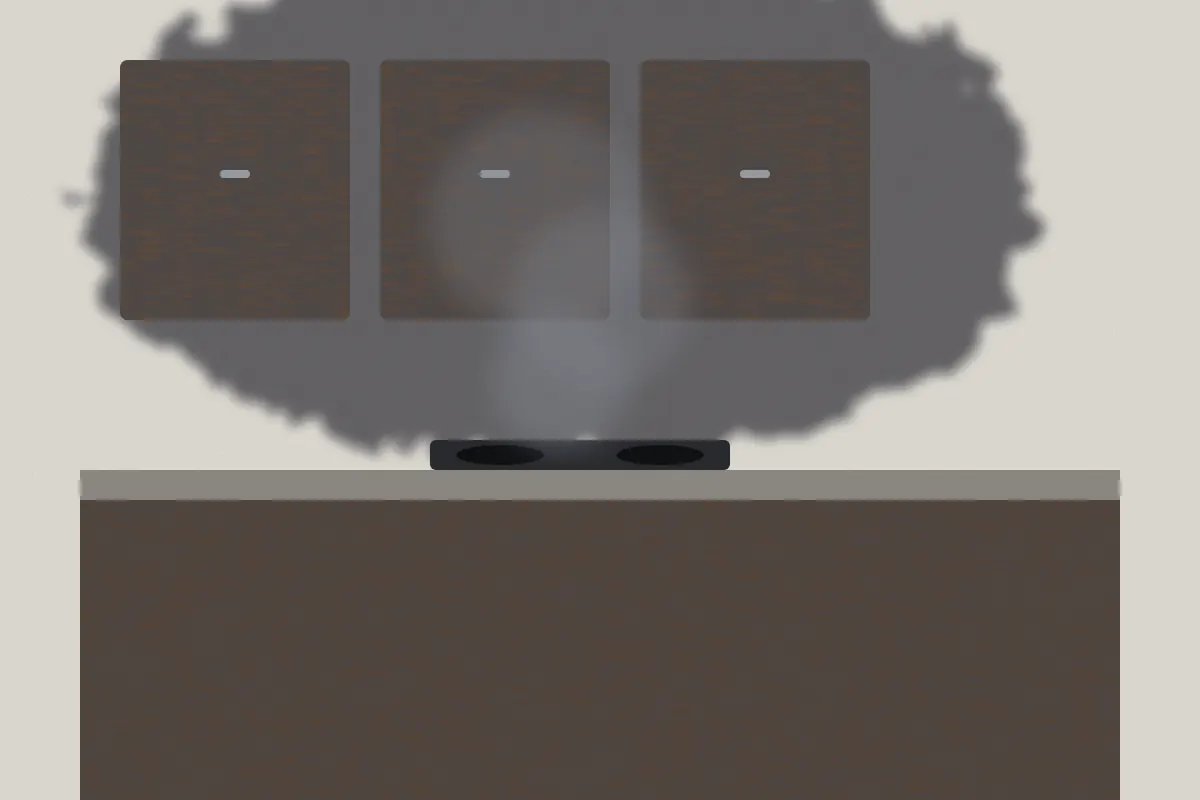
What never to do
- Do not use water
- Do not use flour, which can ignite
- Do not carry or move the pan, which spills burning oil
- Do not open the oven door on an oven fire. Turn it off and keep it closed
- Do not use a glass lid, which can shatter from heat
How to prevent grease fires
- Stay in the kitchen while frying
- Heat oil slowly and watch for smoke, which means it is too hot
- Keep a lid and a baking sheet near the stove
- Keep towels, paper and packaging away from burners
- Clean grease off the stovetop and range hood filter
- Keep a fire extinguisher in the kitchen and learn how to use it
After a grease fire
Even a small grease fire can leave a greasy, smelly residue on cabinets, walls and ceilings, and smoke can spread through the home. This protein and grease residue needs degreasing cleaners, and odor can linger. If the fire damaged cabinets, wiring or walls, or smoke spread beyond the kitchen, call a fire restoration company. Read how to get rid of smoke smell and about smoke damage cleanup.
Quick answers
How do you put out a grease fire?
Turn off the heat and cover the pan with a metal lid or baking sheet. Use baking soda or a Class K or ABC extinguisher if needed.
Can you put water on a grease fire?
No. Water causes burning oil to explode and spread.
Can I use flour on a grease fire?
No. Flour can ignite and make the fire worse.
What kind of fire extinguisher is best for the kitchen?
A multipurpose ABC extinguisher, or a Class K extinguisher for cooking oils.
Who cleans up after a kitchen fire?
A fire damage restoration company. Sifixit can connect you with a local provider.
Related
- Fire damage restoration near you
- How to prevent house fires
- Smoke damage cleanup
- How to get rid of smoke smell
This guide covered grease fire. For more background, see the National Fire Protection Association, and if you need help, Sifixit can connect you with a local provider.
This guide is general information for homeowners, not professional, insurance or safety advice for your situation.
More helpful guides
- Space heater safety: rules that prevent firesSimple rules for using space heaters safely, from the three foot rule to cords, outlets and sleeping.
- What to throw away after a house fireWhich food, medicine, cosmetics and household items to throw away after a fire, what can often be cleaned,...
- Repair or rebuild after a house fire: how the decision is madeThe decision depends on how much of the structure is damaged, whether the foundation and framing are sound,...
- Wildfire smoke damage in your home: what to doEven when a wildfire does not reach your home, smoke and ash can get inside, leaving odor, soot...
- How to prevent house fires: a room by room guideMost house fires start with cooking, heating equipment, electrical problems, smoking or candles.
- Is soot dangerous? Health risks of soot and smoke residueYes, soot can be harmful.