Short answer: Most house fires start with cooking, heating equipment, electrical problems, smoking or candles. Stay in the kitchen while cooking, keep heaters three feet from anything that can burn, fix electrical problems, clean the dryer lint trap, and have working smoke alarms on every level and in every bedroom.
Many house fires can be prevented with simple habits. This room by room guide explains how to prevent house fires, what to check, and how to make sure your family gets out safely if a fire does start.
Kitchen
- Stay in the kitchen while frying, grilling or broiling
- Keep towels, paper and pot holders away from the stove
- Turn pot handles inward
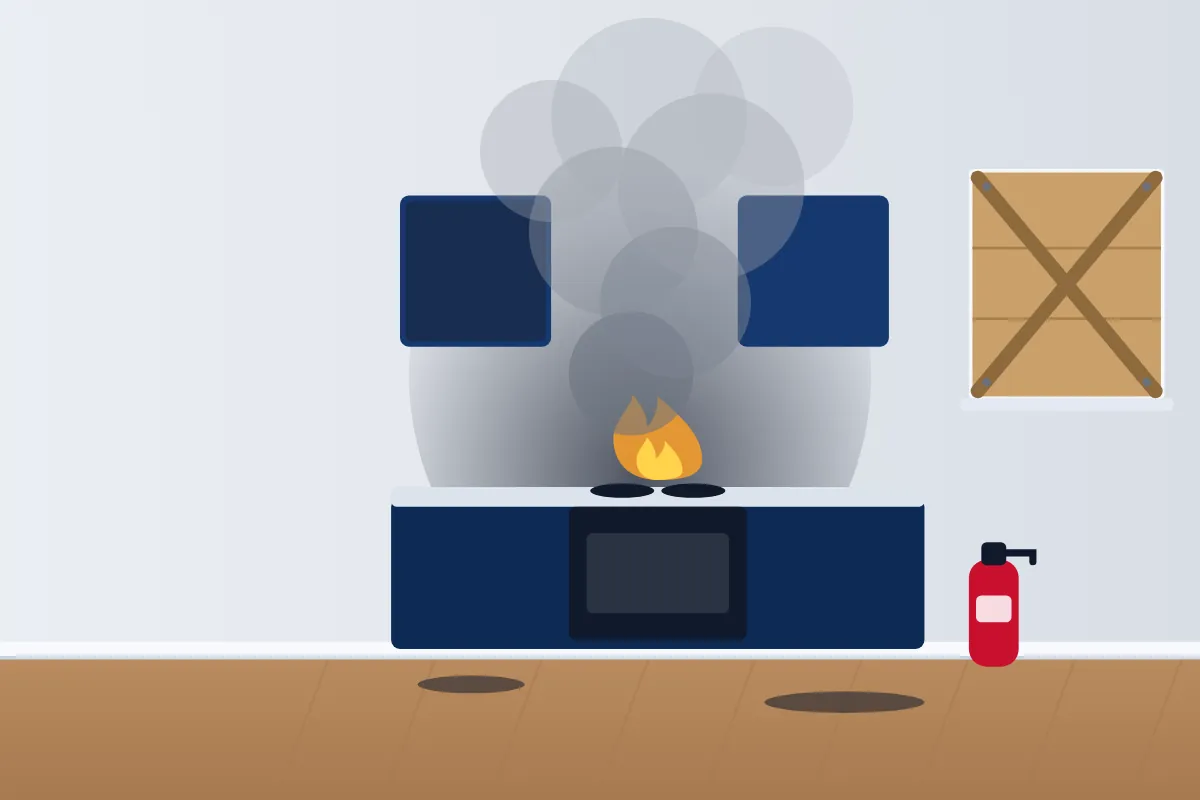
- Keep a lid nearby to smother a pan fire, and never throw water on burning grease
- Clean grease from the stove and range hood filter
According to the National Fire Protection Association, cooking is the leading cause of home fires in the United States.
Living areas and bedrooms
- Keep space heaters at least three feet from furniture, curtains and bedding, and turn them off when you leave or sleep
- Blow out candles when you leave the room, and keep them away from anything that can burn
- Never smoke in bed, and use deep, sturdy ashtrays
- Keep matches and lighters away from children
- Have chimneys inspected and cleaned every year
Electrical
- Do not overload outlets or power strips
- Replace cords that are frayed, cracked or hot
- Call an electrician if breakers keep tripping, lights flicker or outlets feel warm
- Use the right wattage bulbs for each fixture
- Charge e bikes and scooters away from exits, and not overnight
Read electrical repair and why a panel upgrade may be needed in older homes.
Laundry and garage
- Clean the dryer lint trap after every load, and have the vent cleaned regularly
- Do not run the dryer when you are away or asleep
- Store gasoline, paint and chemicals in approved containers away from heat
- Keep the garage free of piles of rags and cardboard
Smoke alarms and extinguishers
- Install smoke alarms on every level, inside every bedroom and outside sleeping areas
- Test alarms every month
- Replace smoke alarms every 10 years, as the NFPA recommends
- Keep a fire extinguisher in the kitchen and learn how to use it
- Install carbon monoxide alarms if you have gas appliances or an attached garage
Holiday and seasonal risks
- Water live Christmas trees daily, and keep them away from heat sources
- Check holiday lights for frayed wires, and turn them off at night
- Never use a grill or generator indoors or in a garage
- Keep outdoor fireworks away from homes and dry grass, where they are legal
- Have the furnace checked before the heating season
Fire safety for children and older adults
Teach children that matches, lighters and candles are tools for adults, and practice the escape plan with them. For older adults, place smoke alarms where they can be heard, consider alarms with strobe lights or bed shakers for people who are hard of hearing, and make sure escape routes are clear of clutter and easy to use with a walker or wheelchair.
Make an escape plan
- Know two ways out of every room.
- Pick a meeting place outside.
- Practice the plan twice a year, including at night.
- Teach children never to hide and never to go back inside.
- Make sure windows and security bars open easily from inside.
Outdoor and wildfire safety
If you live near open land, clear dry brush and leaves from around the house, keep gutters clean and store firewood away from the walls. Keep grills and fire pits well away from the house, railings and overhanging branches.
Quick answers: how to prevent house fires
What is the most common cause of house fires?
Cooking is the leading cause of home fires in the United States, according to the NFPA.
How often should I test smoke alarms?
Test them every month, and replace smoke alarms every 10 years.
How far should a space heater be from furniture?
At least three feet from anything that can burn, and turned off when you leave or sleep.
How do I prevent dryer fires?
Clean the lint trap after every load and have the dryer vent cleaned regularly.
What should I do after a fire?
Get everyone out, call 911, and once it is safe, call your insurer and a fire damage restoration company.
Related
- Fire damage restoration near you
- What to do after a house fire
- Electrical repair
- Is it safe to stay after a fire?
This guide covered how to prevent house fires. For more background, see the National Fire Protection Association, and if you need help, Sifixit can connect you with a local provider.
This guide is general information for homeowners, not professional, insurance or safety advice for your situation.
More helpful guides
- Space heater safety: rules that prevent firesSimple rules for using space heaters safely, from the three foot rule to cords, outlets and sleeping.
- What to throw away after a house fireWhich food, medicine, cosmetics and household items to throw away after a fire, what can often be cleaned,...
- Repair or rebuild after a house fire: how the decision is madeThe decision depends on how much of the structure is damaged, whether the foundation and framing are sound,...
- Wildfire smoke damage in your home: what to doEven when a wildfire does not reach your home, smoke and ash can get inside, leaving odor, soot...
- Kitchen grease fire: what to do and what never to doTurn off the heat, then smother the flames by sliding a metal lid or baking sheet over the...
- Is soot dangerous? Health risks of soot and smoke residueYes, soot can be harmful.