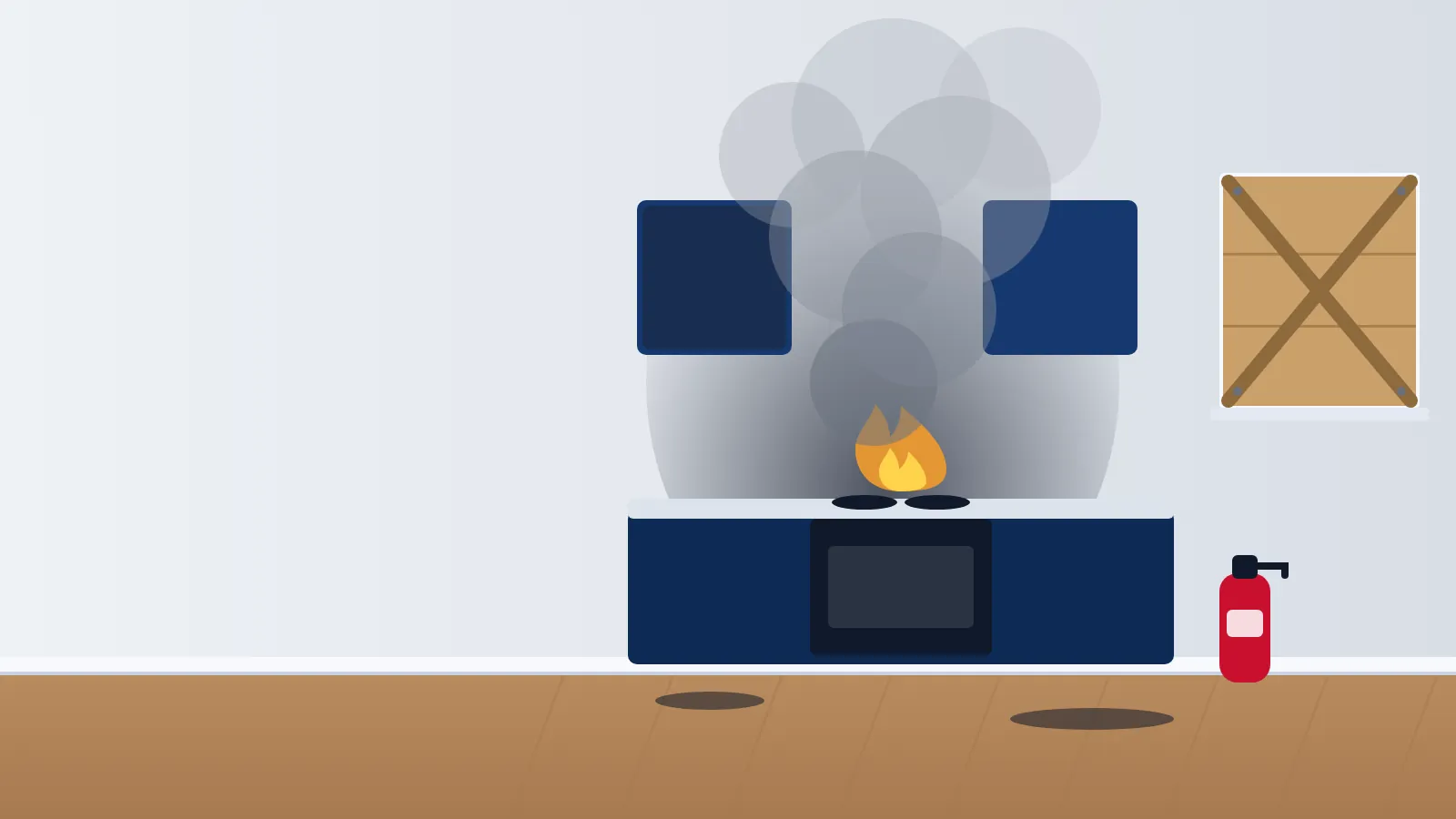
Smoke damage can reach every corner of a home, even after a small fire. Soot settles on walls, ceilings and belongings, the smell soaks into fabrics and drywall, and smoke travels through vents into rooms far from the flames. It can also come from outside, when wildfire smoke gets into a home.
Sifixit is a free referral service. Call the number on this page and you will be connected with an independent fire damage restoration provider where one serves your area. Calling costs nothing and you are never obliged to hire anyone.
Signs of smoke damage
Smoke damage is not always easy to see. These are the most common signs.
- Black or gray soot on walls, ceilings and light fixtures
- Yellow or brown staining on paint, plastic and grout
- A smoke smell that comes back after cleaning
- Dark marks around vents and electrical outlets
- Discolored metal fixtures or pitted surfaces
- A smoky smell when the heating or cooling runs
What to do right now
Do not go back into a home after a fire until the fire department says it is safe. Wear gloves and a well fitting mask around soot, because fine particles can irritate the lungs.
- Open windows for fresh air if the weather allows and the home is secure.
- Do not wipe soot with a wet cloth. It can smear and set the stain.
- Do not run the heating or cooling system until the ducts are checked.
- Do not wash smoky clothes in hot water, which can set the smell.
- Keep a list and photos of smoke damaged items for your insurer.
- Call a fire damage restoration provider.
The kinds of smoke residue
Dry smoke
From fast, hot fires burning wood or paper. It leaves a powdery residue that gets into small gaps.
Wet smoke
From slow, smoldering fires burning plastic or rubber. It is sticky, smears easily and smells strongly.
Protein residue
From kitchen fires where food burned. It is often hard to see but stains paint and leaves a strong odor.
Wildfire smoke and ash
Smoke and ash from outside get into attics, ducts, carpets and furniture, even when the home did not burn.
How a professional cleans smoke damage
- The provider tests surfaces to see which kind of residue is present.
- Loose soot is removed with dry cleaning sponges and HEPA vacuums before any wet cleaning.
- Walls, ceilings, cabinets and hard surfaces are cleaned with methods matched to each material.
- Heating and cooling ducts are cleaned, and filters are replaced.
- Odor is treated at the source, and stained surfaces may be sealed with a primer before painting.
- Belongings are cleaned on site or packed out for specialist cleaning.
A note on odor treatments
- Air fresheners only cover smoke smell for a short time
- Odor removal works best after the soot is fully cleaned
- Some treatments, such as ozone, must only be used in an empty home
- The Environmental Protection Agency warns that ozone can irritate the lungs, so never stay in a room being treated with it
- Ask the provider which method they use and how long to stay out
Questions to ask before you hire
- Which kind of smoke residue do I have, and how will you clean it?
- Will you clean the heating and cooling ducts?
- Which odor treatment will you use, and do I need to leave the home?
- Which belongings can be cleaned, and will you pack them out?
- Will you work with my insurance company and document the damage?
Frequently asked questions
Will the smoke smell ever go away?
In most cases, yes. The source must be removed by cleaning or replacing affected materials, and surfaces are sometimes sealed. Ask the provider how they will confirm the smell is gone.
Does insurance cover smoke damage?
Most homeowners policies cover smoke damage from a fire in the home, and many cover smoke and ash from a nearby wildfire. Document everything and call your insurer early.
Can I clean smoke damage myself?
Light residue in a small area can sometimes be cleaned with a dry soot sponge. Heavy soot, sticky residue or a smell that returns needs professional cleaning.
Is smoke damage dangerous to my health?
Soot contains fine particles that can irritate the lungs, especially for children, older people and anyone with asthma. Limit time in affected rooms until they are cleaned.
Learn more
Our main fire damage restoration guide covers the wider picture, including what affects the cost and when to call a professional.
Sifixit is a free referral service and does not provide home services. Calls may be answered by a partner call center or connected directly to independent local providers, who are solely responsible for their work, pricing, licensing and insurance.