Short answer: Turn off the water valves behind the machine, unplug it if you can do so without standing in water, then remove standing water and start drying within 24 hours. Burst supply hoses are the most common cause.
A washing machine can release a lot of water fast, especially when a supply hose bursts. The first hour decides how much of the floor, walls and the room below can be saved.
Do this first
- Turn off the hot and cold valves behind the washer
- If the outlet is dry and you are not standing in water, unplug the machine; if not, switch off that circuit at the panel
- Shut off the main water valve if the washer valves will not turn
- Move clothes, boxes and rugs out of the room
- Take photos of the water and the machine before cleanup
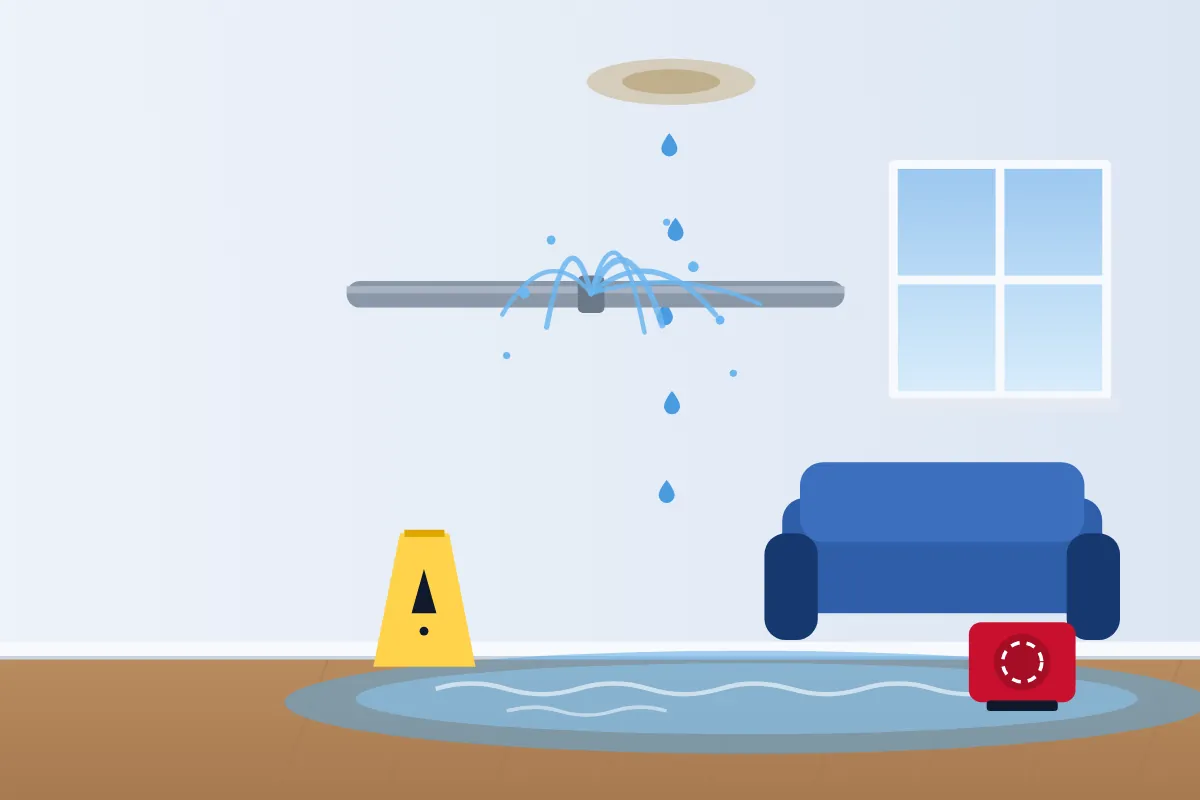
Find the cause
- A burst or cracked supply hose, the most common cause
- A drain hose that slipped out of the standpipe
- A clogged drain or standpipe that overflows during the spin cycle
- A leaking door seal on a front loader
- An overloaded or unbalanced load that splashed over
Dry it out
- Remove standing water with towels, a mop or a wet vacuum
- Pull the washer out and dry the floor underneath
- Run fans and a dehumidifier for at least two to three days
- Check the baseboards and the bottom of the drywall for swelling
- If the laundry is upstairs, check the ceiling below for stains or sagging
Prevent the next one
- Replace rubber hoses with braided stainless steel hoses every five years
- Leave a few inches behind the washer so hoses do not kink
- Add a drain pan and a water leak alarm under the machine
- Turn the washer valves off when you go away for several days
When to call a professional
Call a water damage company if water reached another room, soaked carpet or drywall, or ran into the ceiling below. Hidden water under flooring and inside walls is what leads to mold.
Frequently asked questions
Does insurance cover a washing machine flood?
Sudden water damage from a burst hose is often covered by homeowners insurance. The hose or the machine itself usually is not.
How long does the floor take to dry?
Usually two to five days with fans and a dehumidifier. Wood floors and subfloors can take longer.
Can I use the washer again right away?
Only after the cause is fixed and the hose or drain is replaced or secured.
Related
Read our appliance leak water damage page and our appliance water leaks guide.
For more background, see the EPA WaterSense program, and if you need help, Sifixit can connect you with a local provider.
This site is a free service to assist homeowners in connecting with local service contractors. All contractors are independent and this site does not warrant or guarantee any work performed. It is the responsibility of the homeowner to verify that the hired contractor furnishes the necessary license and insurance required for the work being performed. All persons depicted in a photo or video are actors or models and not contractors listed on this site.
More helpful guides
- Water leaking from the unit above youWhat to do when water leaks into your apartment or condo from the unit above, and who usually...
- Water damaged hardwood floors: can they be saved?Often, yes, if the water was clean and drying starts within a day or two.
- What to do after a flood in your homeReturn only when officials say it is safe, keep the power off until an electrician checks it, and...
- Washing machine and appliance leaks: how to prevent and handle themWashing machines, water heaters, dishwashers, refrigerator ice makers and toilets cause many household water damage claims, usually from...
- Can you stay in your house during water damage restorationOften yes, if the damage is limited to a few rooms of clean water, the power is safe...
- Water leaking from the ceiling: what to do right nowKeep people out from under the leak, switch off power to lights and outlets in that area if...