Short answer: Keep people out from under the leak, switch off power to lights and outlets in that area if it is safe, catch the water, and find the source: usually a bathroom above, a roof leak, an air conditioning drain or a pipe. Then call a plumber or roofer for the source and a restoration company to dry the ceiling.
Water leaking from ceiling drywall, dripping or pouring down, is alarming, and it often gets worse quickly. These steps keep you safe and limit the damage while help is on the way.
Do these things first
- Move people and pets out of the room, and keep everyone away from a sagging ceiling.
- If water is near a light fixture, ceiling fan or smoke detector, switch off that circuit at the panel if you can reach it safely and dry.
- Put buckets or containers under the drips, and towels or plastic sheeting to protect floors.
- Move furniture, electronics and valuables out of the way.
- Photograph the ceiling and anything damaged.
A ceiling that bulges or sags with water can collapse without warning. Stay out from under it and let a professional drain and remove it safely.
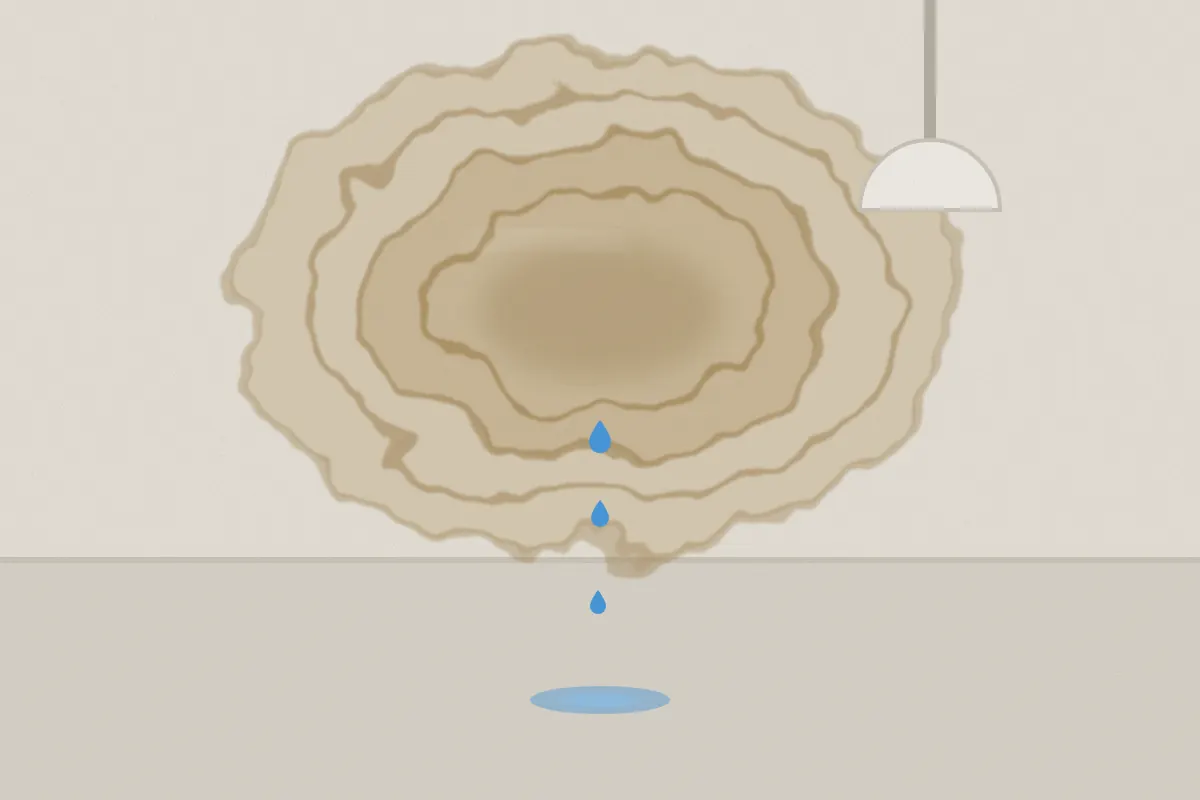
Find where the water is coming from
- A bathroom above: leaks around a toilet, tub, shower pan or supply line are common. Stop using that bathroom and shut its fixture valves.
- The roof: leaks that appear during or after rain usually mean damaged shingles, flashing or a blocked valley.
- Air conditioning: a clogged condensate drain or rusted pan in the attic can overflow, especially in summer.
- A water pipe: a steady drip that continues when nothing is running points to a supply pipe. Shut off the main water valve.
- Ice dams: in cold climates, melting snow backed up under shingles leaks through ceilings near outside walls.
If you cannot tell where it is coming from and it keeps leaking, shut off the main water valve. If the drip stops, the source is plumbing. Read how to shut off your main water valve.
Who to call
- A plumber for leaking pipes, toilets, tubs and showers
- A roofer for leaks during rain or from ice dams, and for an emergency tarp
- An HVAC technician for air conditioning drain problems
- A water damage restoration company to dry the ceiling, walls and insulation

Leaks during rain or in dry weather
Timing is a strong clue. A ceiling leak that only appears during or right after rain usually points to the roof, flashing, gutters or a window. A leak in dry weather usually points to plumbing or air conditioning. In winter, leaks near outside walls after snow often mean ice dams. Telling the plumber or roofer when the leak happens saves time finding it.
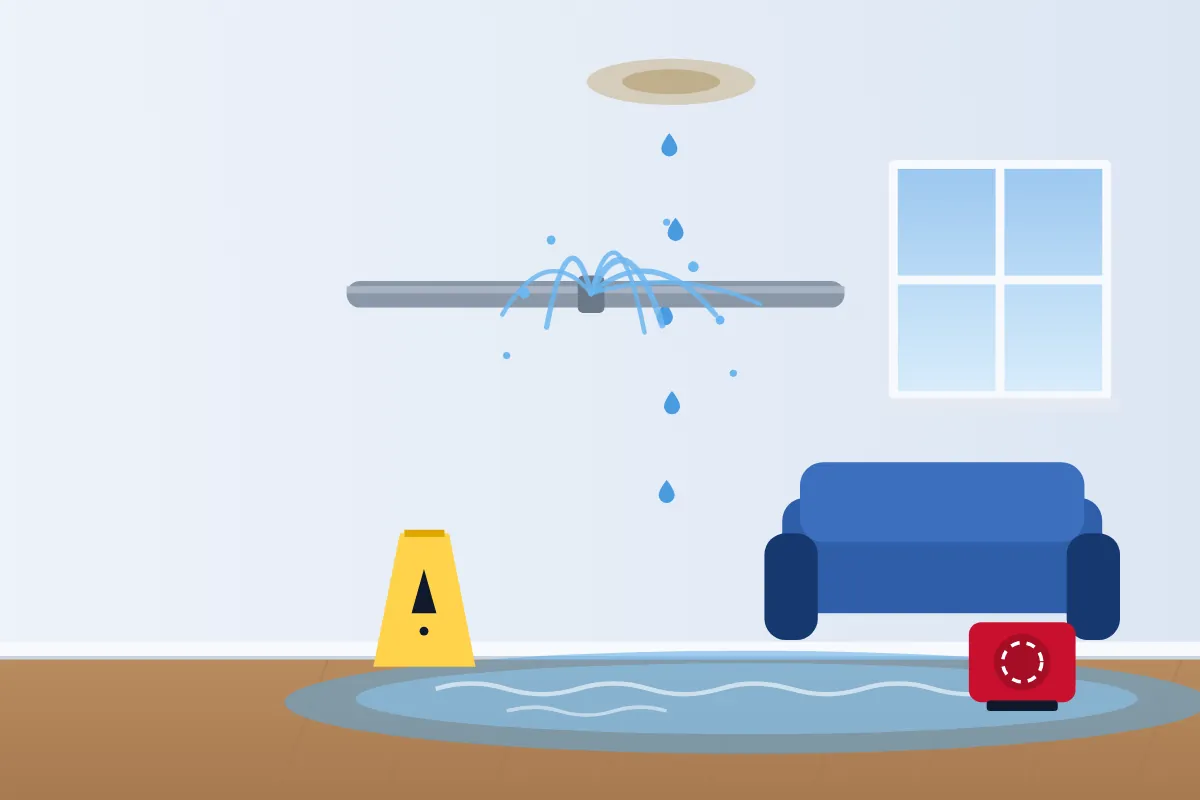
Can a wet ceiling be saved?
Sometimes. Drywall that got briefly wet from clean water, and dried quickly, may only need stain blocking primer and paint. Drywall that sags, crumbles, stays wet or got wet from dirty water usually needs to be cut out and replaced, along with wet insulation above it. A moisture meter shows how far the water spread.
How to prevent ceiling leaks
- Have the roof inspected after major storms and every few years
- Keep gutters and downspouts clear
- Recaulk tubs and showers when caulk cracks
- Replace washing machine and toilet supply hoses every few years
- Clear air conditioning drain lines before summer
- Insulate and ventilate the attic to prevent ice dams
What drying a wet ceiling involves
- The source is found and fixed.
- The technician measures moisture in the ceiling, walls and insulation.
- Sagging or crumbling drywall and soaked insulation are removed.
- Air movers and dehumidifiers dry the framing and remaining materials, with daily readings.
- Once dry, new insulation and drywall go up, followed by stain blocking primer and paint.

Mistakes to avoid
- Standing under a sagging ceiling
- Using lights or fans on a wet circuit
- Painting over a stain before the source is fixed and the area is dry
- Leaving wet insulation in place, which holds moisture and grows mold
Read more about ceiling water damage.
Quick answers: water leaking from ceiling
What should I do if water is leaking from my ceiling?
Keep people away, switch off power to that area if safe, catch the water, find the source and call a plumber or roofer and a restoration company.
Should I poke a hole in a bulging ceiling?
It is safer to keep people away and let a professional drain it, because a water filled ceiling can collapse.
Is a ceiling leak an emergency?
Yes if the ceiling sags, water is near electrics or the leak is heavy. Act quickly either way to limit damage.
Does insurance cover a ceiling leak?
Sudden leaks from pipes, fixtures or storm damaged roofs are often covered. Slow leaks and wear usually are not.
How long does a wet ceiling take to dry?
Often a few days with professional equipment, if the source is fixed and wet insulation is removed.
Related
This guide covered water leaking from ceiling. For more background, see FEMA’s flood insurance pages, and if you need help, Sifixit can connect you with a local provider.
This guide is general information for homeowners, not professional, insurance or safety advice for your situation.
More helpful guides
- Water leaking from the unit above youWhat to do when water leaks into your apartment or condo from the unit above, and who usually...
- Washing machine flooded the laundry roomWhat to do when a washing machine floods the laundry room, from stopping the water to drying the...
- Water damaged hardwood floors: can they be saved?Often, yes, if the water was clean and drying starts within a day or two.
- What to do after a flood in your homeReturn only when officials say it is safe, keep the power off until an electrician checks it, and...
- Washing machine and appliance leaks: how to prevent and handle themWashing machines, water heaters, dishwashers, refrigerator ice makers and toilets cause many household water damage claims, usually from...
- Can you stay in your house during water damage restorationOften yes, if the damage is limited to a few rooms of clean water, the power is safe...