Short answer: Washing machines, water heaters, dishwashers, refrigerator ice makers and toilets cause many household water damage claims, usually from burst hoses or slow leaks. Replace rubber washer hoses with braided stainless steel ones every few years, add drain pans and leak alarms, and know how to shut off each appliance’s water supply.
A split washing machine hose can release hundreds of gallons of water in an hour. A slow drip under a dishwasher can rot a floor for months unnoticed. This guide explains how appliance leaks happen, how to prevent them, and what to do when a washing machine leak or other appliance leak starts.
The most common appliance leaks
- Washing machines: burst or worn supply hoses, loose drain hoses, overflowing drain boxes
- Water heaters: corroded tanks, leaking valves and fittings
- Dishwashers: worn door gaskets, loose supply lines, clogged drains
- Refrigerators: cracked plastic ice maker and water dispenser lines
- Toilets: failed supply lines, fill valves and wax rings
What to do when a leak starts
- Turn off the appliance’s water supply valve, or the main water valve if you cannot find it.
- Unplug the appliance or switch off its breaker if it is safe to reach.
- Remove standing water with towels, a mop or a wet vacuum.
- Pull the appliance out if you can, to dry behind and under it.
- Photograph the damage for your insurer.
- Call a plumber or appliance technician for the repair, and a water damage company if water reached walls, subfloors or the floor below.
How to prevent appliance leaks
- Replace rubber washing machine hoses with braided stainless steel hoses, and replace any hose every few years
- Leave a few inches behind the washer so hoses do not kink
- Put drain pans under water heaters and washing machines on upper floors
- Use water leak alarms under sinks, dishwashers and water heaters
- Consider an automatic shutoff valve that closes the water supply when a leak is detected
- Replace plastic ice maker lines with braided or copper lines
- Turn off the washer supply valves when you travel
Signs of a hidden appliance leak
- Warped, soft or stained flooring near the appliance
- A musty smell in the laundry room or kitchen
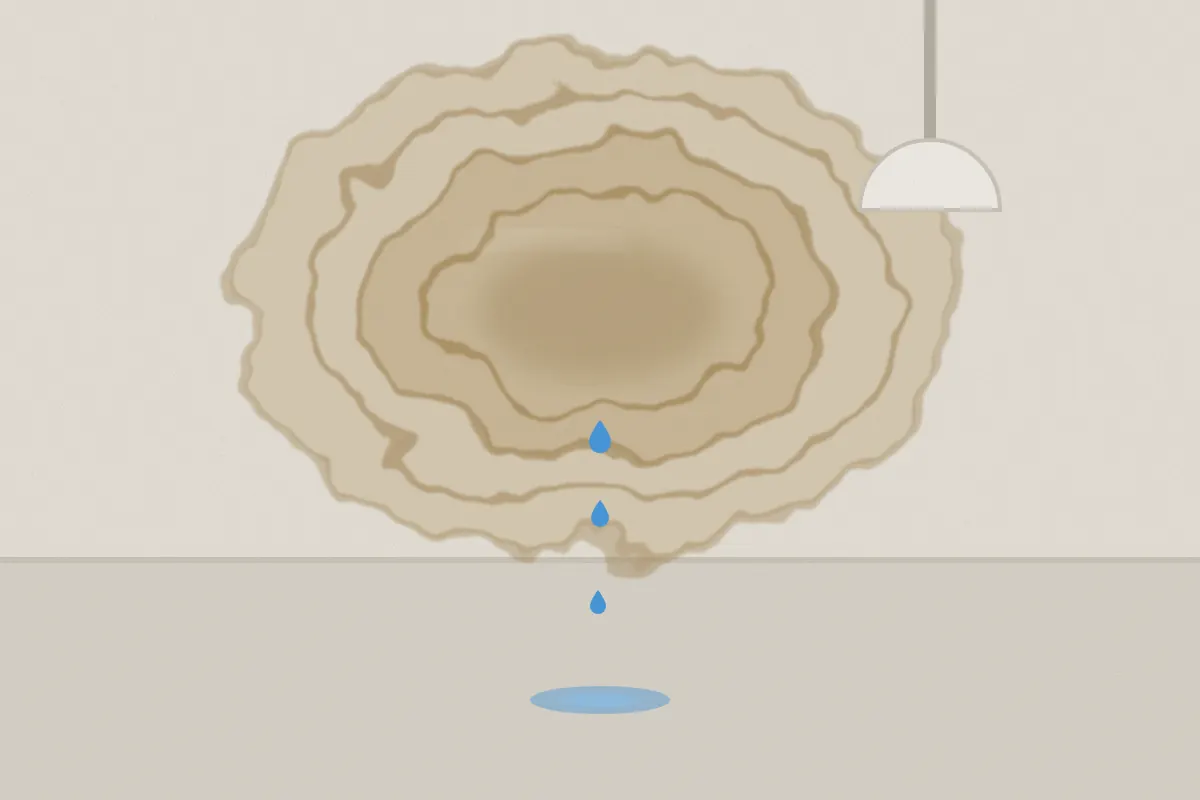
- Stains on the ceiling below a laundry room or kitchen
- Water bills higher than usual
- Mold on the wall behind the appliance
Read our guide to hidden water damage signs.
Insurance and appliance leaks
Sudden water damage from a burst hose or failed appliance is often covered by homeowners insurance. Repairing the appliance itself and damage from slow, long term leaks usually are not. Report sudden leaks quickly. Read about water damage insurance claims.
Quick answers: washing machine leak
What should I do if my washing machine is leaking?
Turn off its water supply, unplug it if safe, remove standing water and call a plumber or appliance technician.
How often should washing machine hoses be replaced?
Every few years, and braided stainless steel hoses last longer than rubber.
Do water leak alarms work?
Yes. Inexpensive alarms under sinks, dishwashers and water heaters give early warning of leaks.
Does insurance cover appliance leaks?
Sudden water damage from a burst hose or failure is often covered. Slow leaks and the appliance itself usually are not.
Who dries water damage from an appliance leak?
A water damage restoration company. Sifixit can connect you with a local provider.
Related
- Water damage restoration near you
- Hidden water damage signs
- Water heater leaking
- How to shut off the main water valve
This guide covered washing machine leak. For more background, see FEMA’s flood insurance pages, and if you need help, Sifixit can connect you with a local provider.
This guide is general information for homeowners, not professional, insurance or safety advice for your situation.
More helpful guides
- Water leaking from the unit above youWhat to do when water leaks into your apartment or condo from the unit above, and who usually...
- Washing machine flooded the laundry roomWhat to do when a washing machine floods the laundry room, from stopping the water to drying the...
- Water damaged hardwood floors: can they be saved?Often, yes, if the water was clean and drying starts within a day or two.
- What to do after a flood in your homeReturn only when officials say it is safe, keep the power off until an electrician checks it, and...
- Can you stay in your house during water damage restorationOften yes, if the damage is limited to a few rooms of clean water, the power is safe...
- Water leaking from the ceiling: what to do right nowKeep people out from under the leak, switch off power to lights and outlets in that area if...