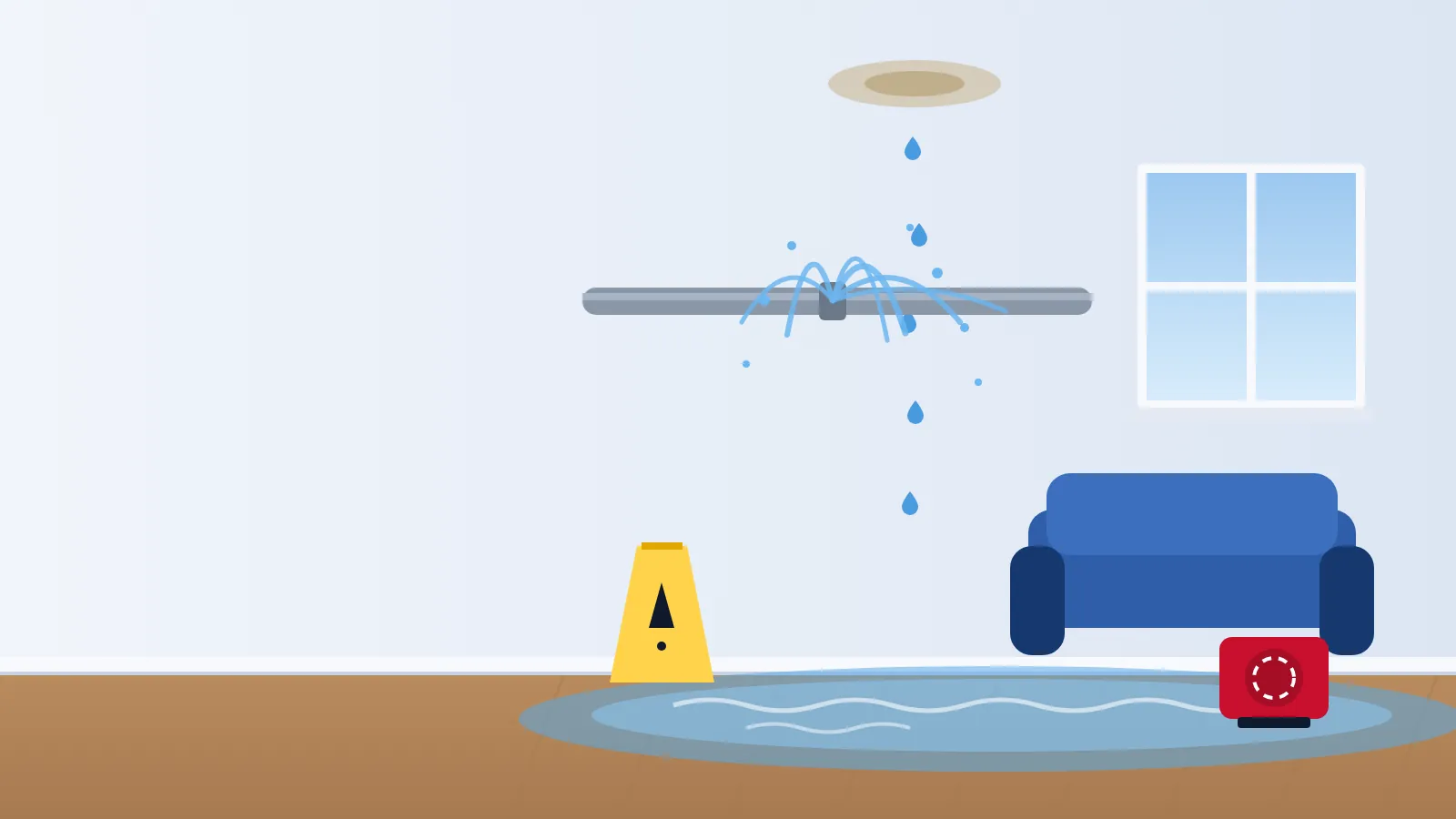
A water stain on the ceiling is easy to ignore, but it usually means water is sitting somewhere above it. Left alone, a small leak can soak insulation, rot wood, grow mold and, in bad cases, bring part of the ceiling down.
Sifixit is a free referral service. Call the number on this page and you will be connected with an independent water damage restoration provider where one serves your area. Calling costs nothing and you are never obliged to hire anyone.
Signs of water damage in a ceiling
Ceiling damage often starts small and grows. Look for these signs.
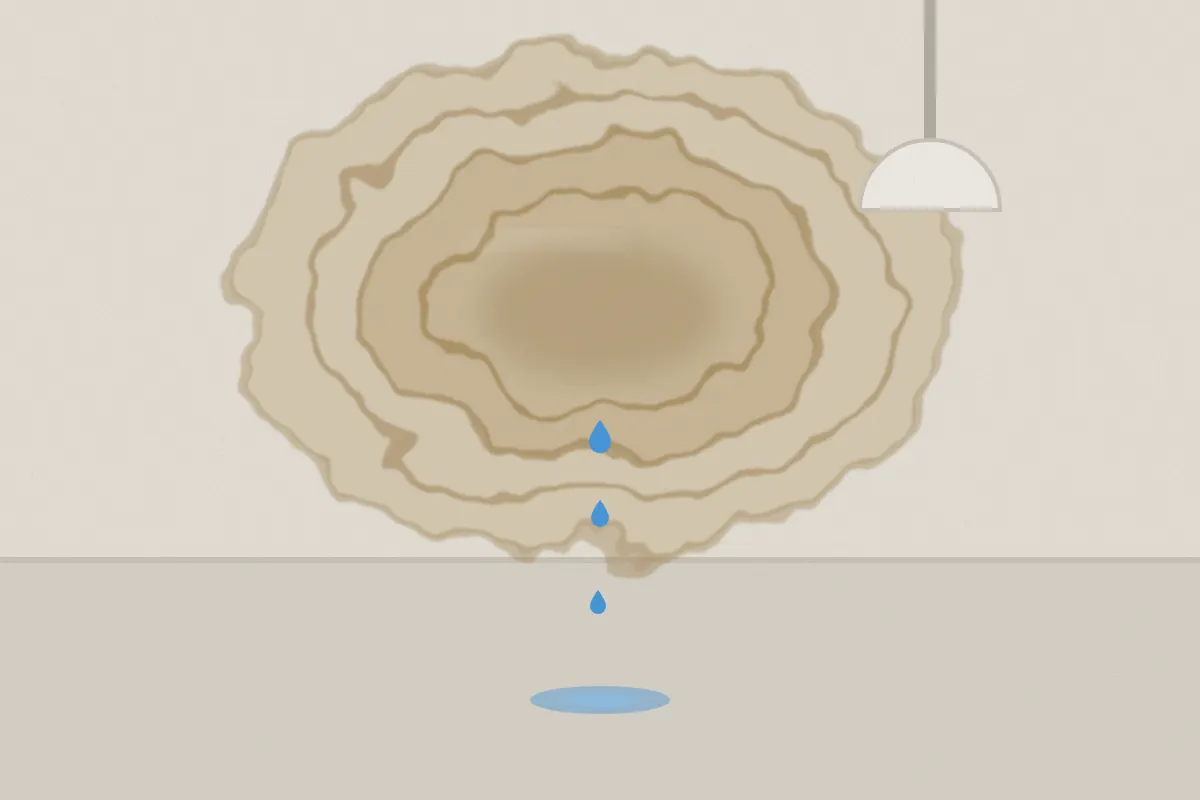
- Yellow, brown or ring shaped stains
- Bubbling or peeling paint
- A ceiling that sags or bulges
- Drips, or water coming from a light fixture
- Cracks that appear or grow
- A musty smell or dark spots of mold
What to do right now
If a ceiling is sagging or bulging with water, keep everyone out of the room. It can give way without warning. If water is coming through a light fixture, switch off the power to that area at the main panel.
- Move people, pets and furniture away from the damaged area.
- Put a bucket or tub under any drips and cover the floor.
- If the leak is from a pipe, shut off the main water valve.
- If a bathroom is above, stop using its shower, tub and toilet.
- Take photos of the stain and any damage.
- Call a restoration provider to find the source and dry the ceiling.
Where ceiling leaks come from
Roof leaks
Damaged shingles, worn flashing around chimneys and vents, and clogged gutters can all let rain into the attic.
Bathrooms above
A worn toilet seal, cracked grout or a leaking shower pan can drip into the ceiling below for months.
Air conditioning
Units in the attic make condensation. A clogged drain line or a rusted pan can overflow onto the ceiling.
Plumbing pipes
Supply and drain pipes running between floors can leak at joints or burst in a freeze.
How a professional repairs ceiling water damage
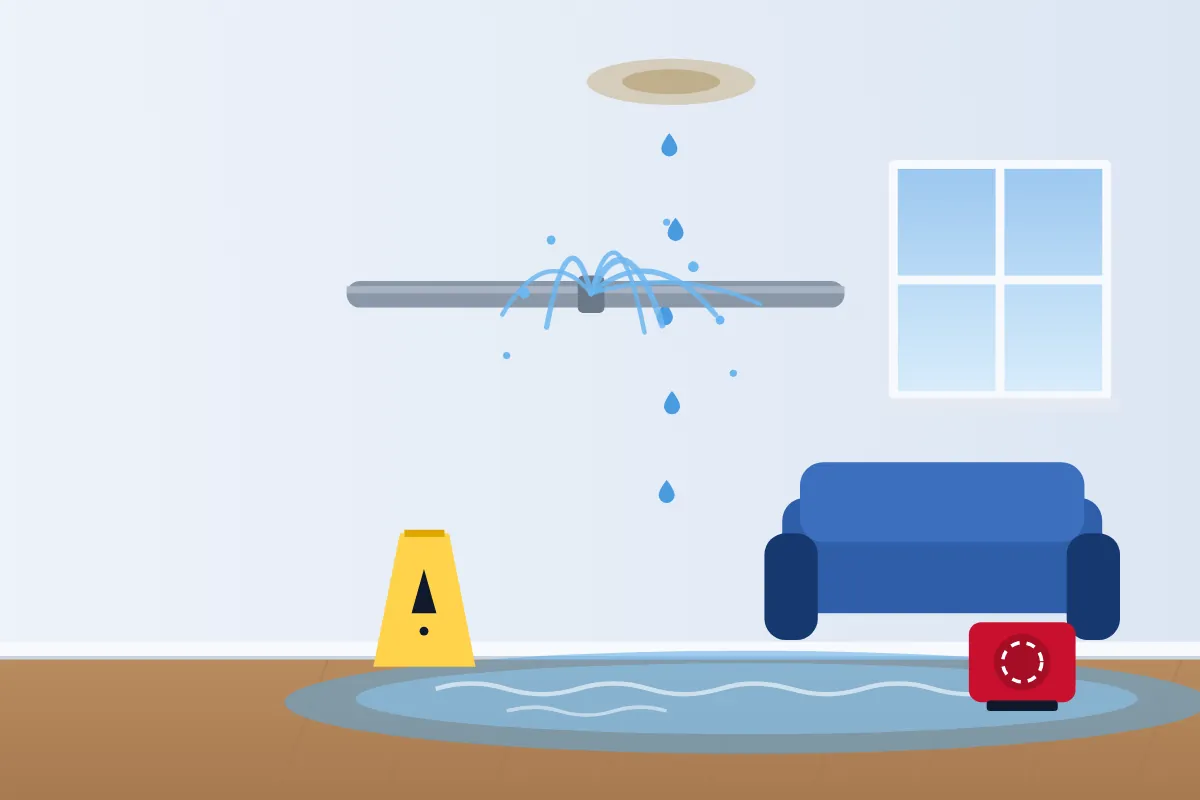
- The source of the water is found and stopped first, whether that is the roof, a bathroom, a pipe or an air conditioner.
- Trapped water is released and the area above the ceiling is checked with moisture meters.
- Wet insulation is removed and the space is dried with air movers and dehumidifiers.
- Drywall that is sagging, soft or stained through is cut out and replaced.
- The new area is sealed with a stain blocking primer and painted to match.
How to catch ceiling leaks early
- Check your attic after heavy rain and look for damp insulation
- Have your roof inspected after any hail or wind storm
- Clean the air conditioning drain line and check the drip pan
- Watch the ceiling under bathrooms for small stains
- Keep gutters clear so water does not back up under shingles
Questions to ask before you hire
- Can you find and confirm the source of the leak?
- Will you check the insulation and framing above the ceiling?
- Do I need a roofer or plumber as well as you?
- How will you make sure the area is dry before it is closed up?
- Will the repair be painted to match the rest of the ceiling?
Frequently asked questions
Can I just paint over a ceiling water stain?
Not until the leak is fixed and the area is completely dry. Otherwise the stain will come back and mold may grow behind the paint. Use a stain blocking primer before painting.
Is a sagging ceiling dangerous?
Yes. A ceiling holding water can collapse. Keep people out of the room and call for help quickly.
Does insurance cover ceiling water damage?
Damage from a sudden event, such as a burst pipe or storm damage to the roof, is often covered. Damage from a slow leak or poor maintenance often is not.
How long does a ceiling repair take?
Drying often takes a few days. Replacing and finishing drywall usually takes another few days once everything is dry.
Learn more
Our main water damage restoration guide covers the wider picture, including what affects the cost and when to call a professional.
Sifixit is a free referral service and does not provide home services. Calls may be answered by a partner call center or connected directly to independent local providers, who are solely responsible for their work, pricing, licensing and insurance.