Short answer: After a Florida hurricane, mold can start growing within a day or two on wet drywall, insulation and flooring, helped by constant humidity. Dry the home quickly, remove soaked porous materials, and check hidden areas with a moisture meter before rebuilding. Florida licenses mold assessors and mold remediators, and an assessor cannot remove mold on a property they assessed within the past 12 months.
Hurricanes Ian in 2022 and Helene and Milton in 2024 left thousands of Florida homes with flooding, roof leaks and wet walls. In Florida’s heat and humidity, mold follows quickly. This guide covers Florida mold after hurricanes, and the state rules that protect homeowners.
Why mold spreads so fast in Florida
- Warm, humid air that keeps materials from drying
- Long power outages that stop air conditioning after storms
- Storm surge and flood water soaking walls and floors
- Roof leaks that wet attics and insulation
After the storm: preventing mold
- Remove standing water as soon as it is safe.
- Pull out wet carpet, pad, furniture and belongings.
- Cut out wet drywall and insulation, usually at least a foot above the water line.
- Dry with fans, dehumidifiers and air conditioning once the power is safe.
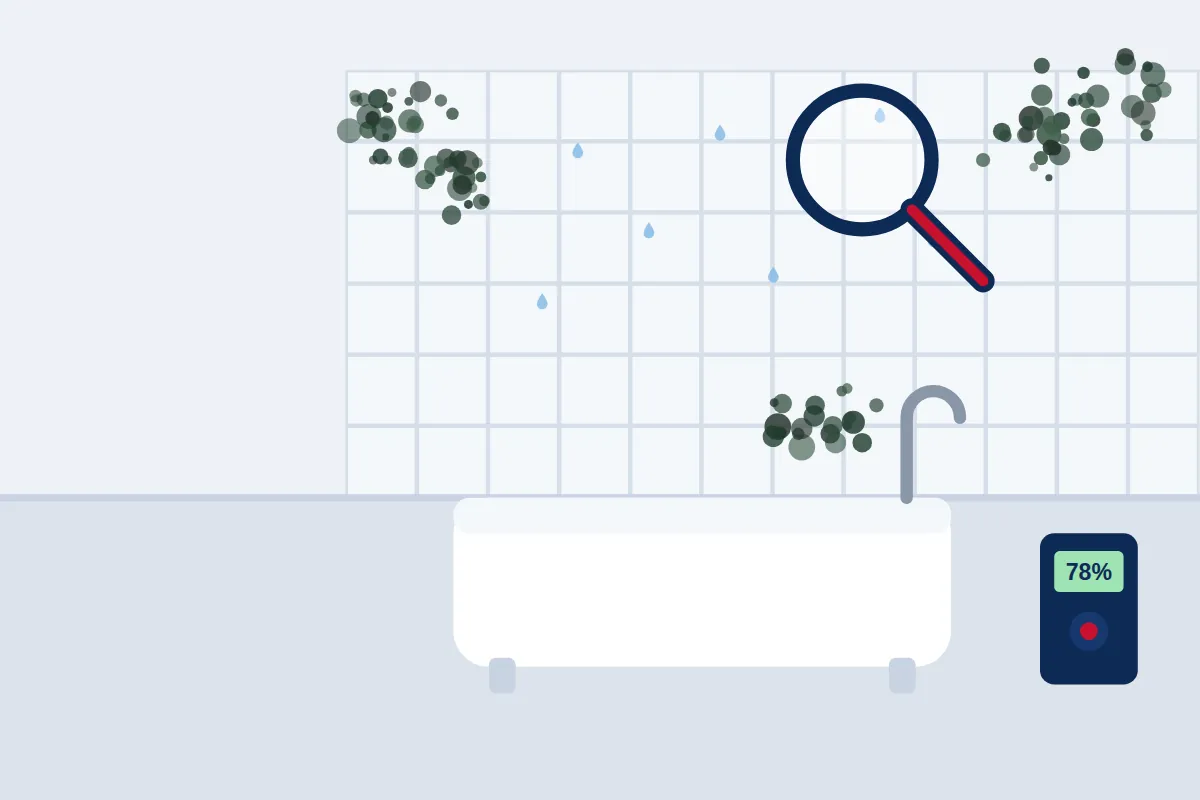
- Check framing with a moisture meter before closing walls.
- Keep indoor humidity below 60 percent.
Florida mold licensing
- Florida licenses mold assessors and mold remediators through the Department of Business and Professional Regulation
- Ask for license numbers and check them
- An assessor may not perform remediation on a property they assessed within the past 12 months, which helps avoid conflicts of interest
- Get the remediation plan and a clearance check in writing
Insurance and contractors
- Flood damage is covered by flood insurance, not standard homeowners insurance
- Mold coverage is often limited, so report water damage quickly
- Florida no longer allows assignment of benefits for homeowners policies issued since January 1, 2023
- Be cautious of unlicensed contractors who arrive after storms
Read how fast mold grows after water damage and what to do after a flood.
Local help in Florida
- Mold removal in Miami
- Mold removal in Fort Lauderdale
- Mold removal in Tampa
- Mold removal in St. Petersburg
- Mold removal in Naples
- Mold removal in West Palm Beach
Quick answers: florida mold after hurricane
How fast does mold grow after a Florida hurricane?
Mold can start within 24 to 48 hours on wet materials, faster in Florida’s heat and humidity.
Do mold companies need a license in Florida?
Yes. Florida licenses mold assessors and mold remediators through the Department of Business and Professional Regulation.
Can the same company test and remove mold in Florida?
An assessor may not remediate a property they assessed within the past 12 months.
Does insurance cover mold after a hurricane?
Coverage is often limited and depends on the cause. Flood damage needs flood insurance.
Who removes mold in Florida?
Sifixit can connect you with a local mold removal provider.
Related
This guide covered florida mold after hurricane. For more background, see the EPA’s mold guide, and if you need help, Sifixit can connect you with a local provider.
This guide is general information for homeowners, not professional, insurance or safety advice for your situation.
More helpful guides
- Mold under carpet: signs and what to doHow to tell if mold is growing under your carpet, why it happens, and whether the carpet can...
- Mold in a rental home: what tenants and landlords should knowTenants should report mold and any leak to the landlord in writing, with photos, and keep a copy.
- Mold on windows and window sills: causes and preventionMold on windows usually comes from condensation: warm, damp indoor air hits cold glass and frames, and water...
- Mold in AC vents and air ducts: signs and what to doDark spots on vent covers, a musty smell when the air conditioning runs and allergy symptoms that worsen...
- Bathroom mold: causes, cleaning and preventionBathroom mold grows because of steam, standing water and poor ventilation.
- Do I need mold testing? When it helps and when it does notIf you can see or smell mold, you usually do not need testing to know it must be...