Short answer: Sticking doors and windows, cracks above door frames, sloping floors and stair step cracks in brick are the most common signs. Wide, growing or horizontal cracks need a professional look.
Foundation problems usually show up away from the foundation itself, in doors, walls and floors. These are the signs to watch for, inside and out.
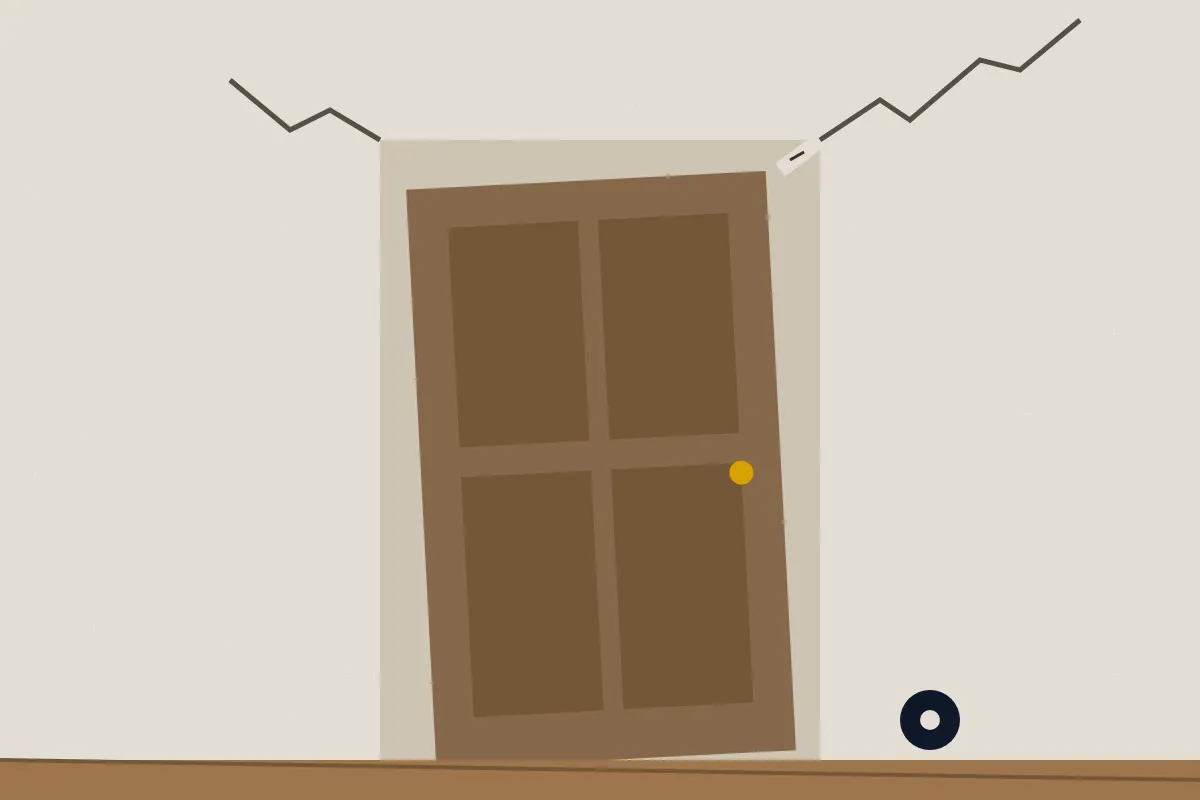
Signs inside the home
- Doors and windows that stick, will not latch or swing open on their own
- Cracks in drywall, especially at the corners of doors and windows
- Floors that slope, bounce or feel uneven
- Gaps between walls and the ceiling or floor
- Cracks in tile floors
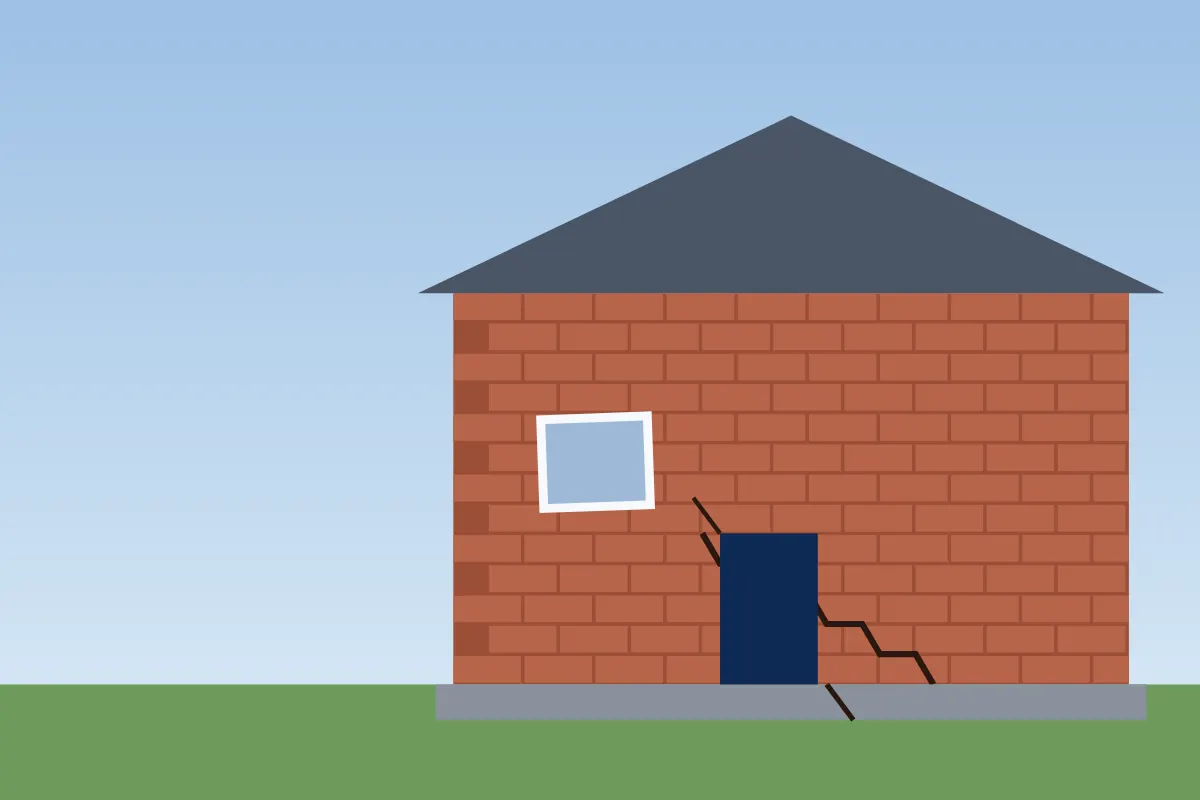
Signs outside the home
- Stair step cracks in brick or block
- Cracks in the foundation wall or slab edge
- Gaps around window and door frames
- A chimney leaning away from the house
- Soil pulling away from the foundation
Which cracks matter most
- Thin vertical hairline cracks are common and often cosmetic
- Cracks wider than about a quarter inch need a closer look
- Horizontal cracks in basement walls can mean soil pressure
- Cracks with one side higher than the other suggest movement
- Cracks that keep growing need an inspection
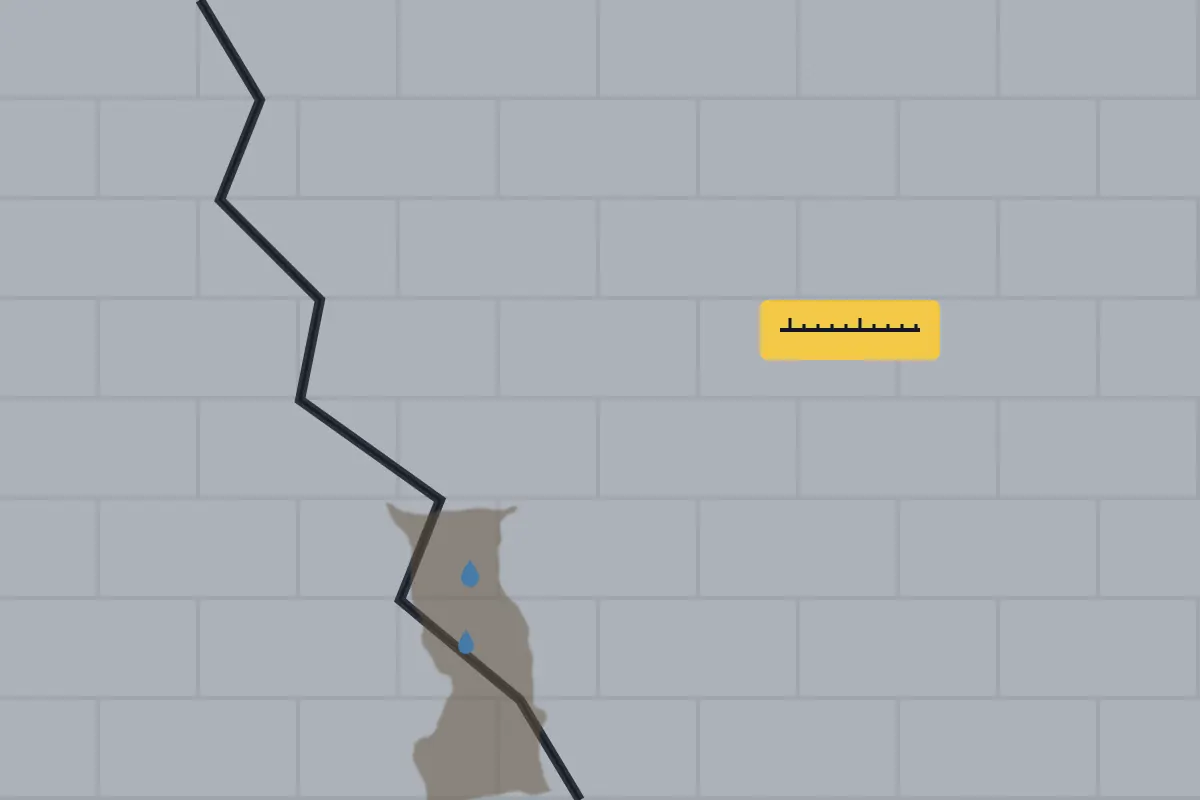
How to track a crack
Mark both ends of the crack with a pencil and write the date. Measure the width and take a photo with a ruler. Check again every few weeks. A crack that grows needs a professional inspection.
When to call a professional
Call for an inspection if cracks are wide, growing, horizontal or offset, or if doors suddenly stick. For large repairs, an independent structural engineer can give a neutral opinion on what is needed.
Frequently asked questions about signs of foundation problems
Are all cracks a sign of foundation problems?
No. Small hairline cracks from concrete shrinking are common. Look for size, growth and other signs together.
What causes foundation problems?
Soil that swells and shrinks, poor drainage, plumbing leaks and tree roots are common causes.
Can foundation problems be fixed?
Yes. Piers, slab leveling, wall bracing and drainage fixes can stabilize most foundations.
Does insurance cover foundation problems?
Usually not for settling or soil movement. Damage from a sudden covered event may be covered.
Related
Read our foundation repair guide and our page on foundation crack repair.
This guide covered signs of foundation problems. For more background, see the FTC’s advice on hiring a contractor and avoiding home improvement scams, and if you need help, Sifixit can connect you with a local provider.
This site is a free service to assist homeowners in connecting with local service contractors. All contractors are independent and this site does not warrant or guarantee any work performed. It is the responsibility of the homeowner to verify that the hired contractor furnishes the necessary license and insurance required for the work being performed. All persons depicted in a photo or video are actors or models and not contractors listed on this site.
More helpful guides
- Sagging floors: causes and how they are fixedSagging floors are usually caused by settling or failing supports under the house, joists that are rotted, damaged...
- Basement waterproofing: options and how to chooseBasement waterproofing starts outside, with gutters, downspouts and grading that keep water away.
- Crawl space moisture: causes, problems and fixesCrawl space moisture comes from damp ground, outside humid air, plumbing leaks and poor drainage.