Short answer: Carbon monoxide is a colorless, odorless gas from burning fuel. Install carbon monoxide alarms on every level of the home and outside sleeping areas, test them monthly, have gas appliances and chimneys checked every year, and never run generators, grills or cars inside or in an attached garage. If an alarm sounds, get everyone out and call 911.
Carbon monoxide, or CO, is called the invisible killer because you cannot see, smell or taste it. Every home with fuel burning appliances or an attached garage needs protection. This guide covers carbon monoxide safety basics.
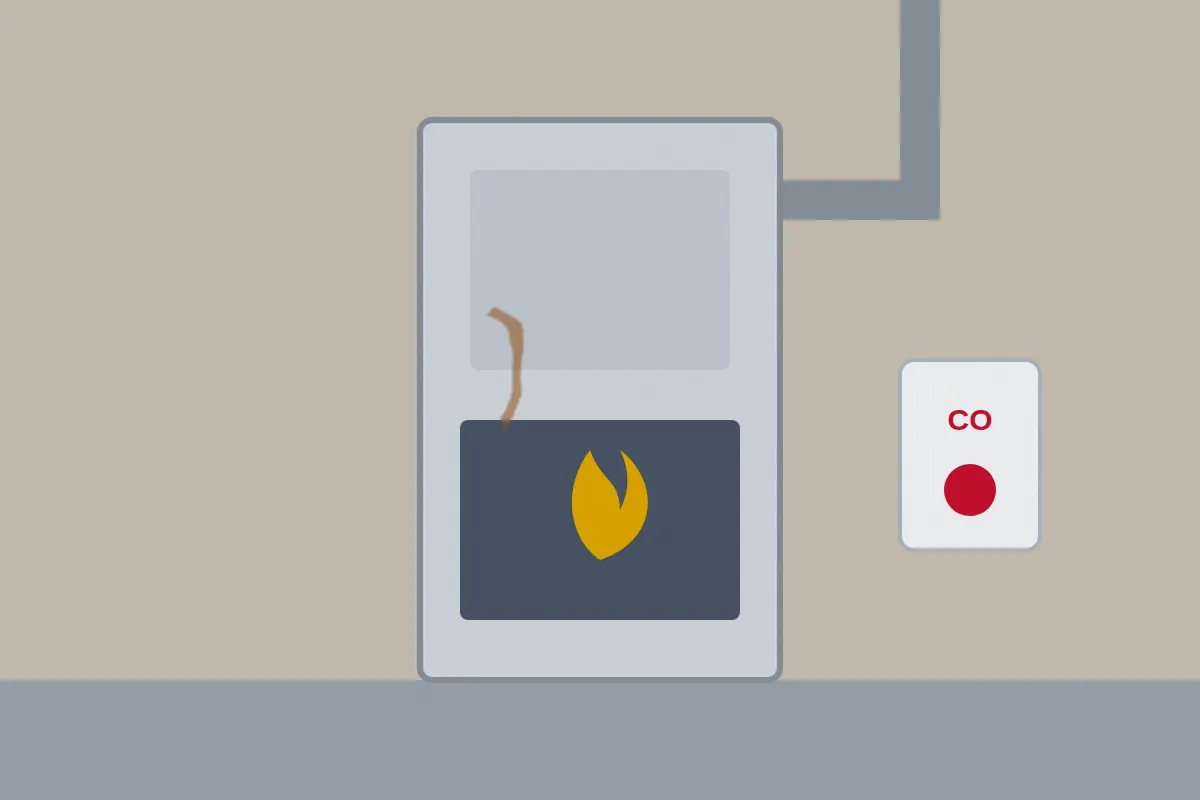
If a carbon monoxide alarm sounds or anyone has symptoms, get everyone, including pets, outside into fresh air right away and call 911. Do not go back in until responders say it is safe.
Where carbon monoxide comes from
- Gas furnaces, boilers and water heaters
- Gas stoves and ovens
- Fireplaces and wood stoves
- Portable generators
- Cars and small engines in attached garages
- Charcoal grills and camp stoves
Symptoms of carbon monoxide poisoning
- Headache
- Dizziness and weakness
- Nausea or vomiting
- Shortness of breath
- Confusion
- Blurred vision
Symptoms can feel like the flu. A clue is when several people or pets in the home feel ill at the same time, and feel better when they leave.
Carbon monoxide alarms
- Install alarms on every level of the home and outside each sleeping area
- Test them every month
- Replace batteries as the manufacturer recommends
- Replace the alarms at the end of their life, often 5 to 10 years, as shown on the label
- Consider combination smoke and CO alarms, or interconnected alarms
Prevention
- Have your furnace, water heater and other gas appliances checked every year
- Have chimneys and flues inspected and cleaned
- Never use a gas oven or stove to heat the home
- Run portable generators outside, at least 20 feet from the home, away from doors, windows and vents, as the CDC advises
- Never run a car in a garage, even with the door open
- Keep vents and flues clear of snow, leaves and nests
Warning signs from appliances
- A yellow or flickering flame on a gas appliance instead of blue
- Soot or stains around appliances
- Excess moisture on windows near appliances
- A pilot light that keeps going out
Read about furnace repair and heat pumps vs furnaces.

Quick answers: carbon monoxide safety
Where should carbon monoxide alarms go?
On every level of the home and outside each sleeping area.
What are the symptoms of carbon monoxide poisoning?
Headache, dizziness, nausea, shortness of breath and confusion, often like the flu.
How far should a generator be from the house?
At least 20 feet, away from doors, windows and vents.
How often should CO alarms be replaced?
At the end of their life shown on the label, often 5 to 10 years.
Who checks furnaces for carbon monoxide?
An HVAC technician. Sifixit can connect you with a local HVAC company.
Related
This guide covered carbon monoxide safety. For more background, see ENERGY STAR’s heating and cooling advice, and if you need help, Sifixit can connect you with a local provider.
This guide is general information for homeowners, not professional, insurance or safety advice for your situation.
More helpful guides
- AC leaking water inside the houseWhy an air conditioner leaks water inside the house, what you can check yourself, and when to call...
- Furnace burning smell: when to worryWhy a furnace smells like burning when you first turn it on, which smells are normal, and which...
- AC not turning on? What to check firstCheck the thermostat is set to cool, below room temperature and has working batteries.
- How often should you change your air filter?Most homes should change a standard 1 inch air filter every one to three months.
- Why is my AC freezing up? Causes and what to doAn AC usually freezes because too little warm air is flowing over the indoor coil, from a dirty...
- Heat pump vs furnace: which is better for your homeA heat pump heats and cools with electricity by moving heat, and is very efficient in mild and...