Short answer: Usually the property owner is responsible, but homeowners or renters insurance often pays when the cleanup follows a covered event such as an unattended death or a trauma. Crime victim compensation programs may help after a crime, and landlords, estates or businesses may pay in some situations.
Biohazard cleanup often comes at the worst possible time, after a death, an injury or a crime. Families understandably want to know who pays for biohazard cleanup before they call anyone. This guide explains the usual options.
Homeowners insurance
Many homeowners policies help pay for cleanup after an unattended death, a suicide or a violent crime in the home, because the damage to the structure and contents is sudden and accidental. Coverage depends on the policy, deductibles and limits. Sewage cleanup is usually covered only with a sewer backup endorsement, and hoarding cleanup is usually not covered because it builds up over time.
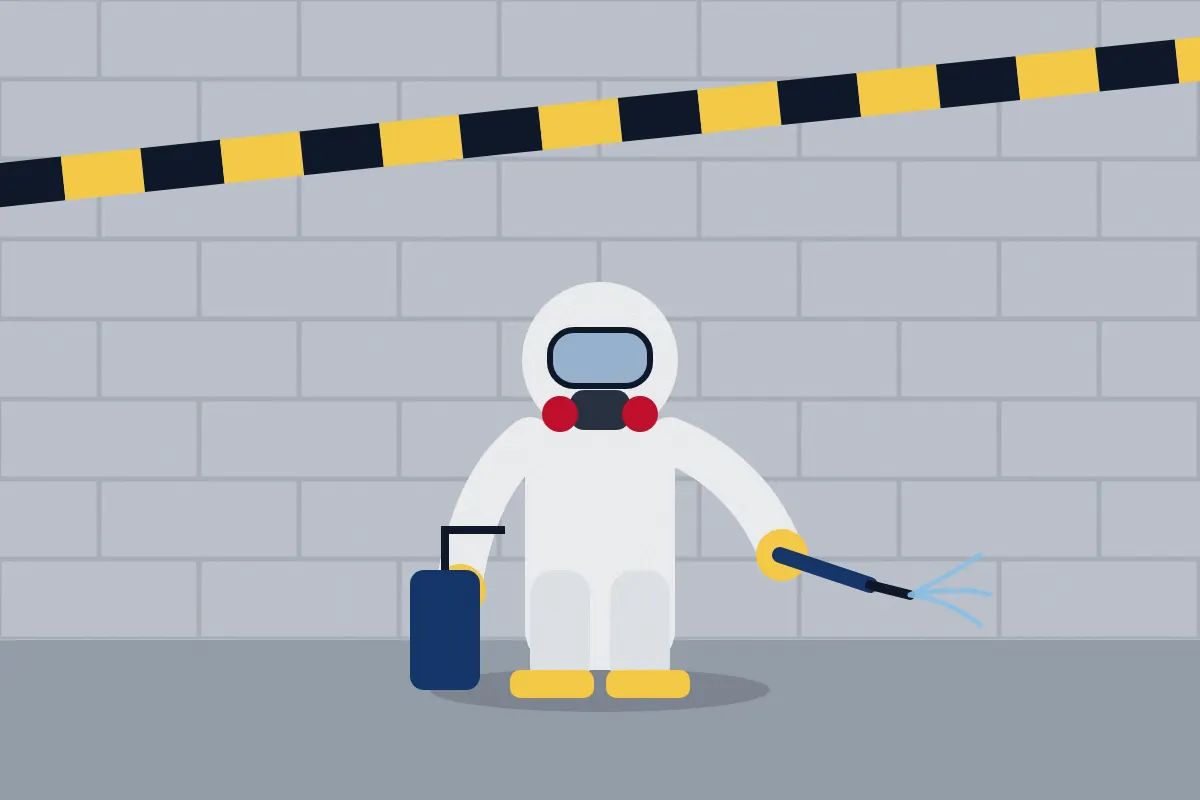
Renters insurance
Renters insurance may help with the renter’s own belongings and sometimes cleanup costs. The building itself is usually the landlord’s responsibility and covered by the landlord’s policy.
Crime victim compensation
Every state runs a crime victim compensation program. Many of these programs can help eligible victims or families with crime scene cleanup costs, alongside medical and funeral costs. There are rules, limits and deadlines, and the program usually pays only what insurance does not. Ask the victim advocate at the police department or prosecutor’s office how to apply.
Other people who may pay
- Landlords: for cleanup in rental units, often through the landlord’s insurance
- Estates: the estate of the person who died may pay for cleanup of their home
- Businesses: for incidents on business property
- Auto insurance: for biohazard cleanup inside a vehicle in some cases
How to handle the bill
- Call your insurer as soon as possible and ask whether cleanup is covered.
- Ask the biohazard cleanup company whether it can work directly with your insurer.
- Get a written scope of work and price before work starts.
- Keep all receipts and the company’s report and photos.
- Ask the victim advocate about compensation if a crime was involved.
You do not have to clean up after a death or a trauma yourself. Trained providers handle it with discretion, and insurance often helps with the cost.
Questions to ask your insurer
- Is biohazard cleanup covered for this event, and up to what limit?
- What deductible applies?
- Do you want to inspect before cleanup starts?
- Will you pay the cleanup company directly?
- Are damaged belongings and repairs covered too?
If the claim is denied
Ask the insurer to explain the denial in writing and to point to the policy wording. Check whether a crime victim compensation program, the landlord’s insurance or the estate could help. Many states have a department of insurance that can answer questions or take complaints if you believe a claim was handled unfairly.
What affects the cost
The cost depends on how much area is affected, how long before the scene was found, what materials must be removed, disposal of regulated waste and any repairs afterwards. Read our biohazard cleanup cost guide.
Quick answers: who pays for biohazard cleanup
Who pays for biohazard cleanup?
Usually the property owner, often with help from homeowners insurance after a covered event such as an unattended death or trauma.
Does homeowners insurance cover biohazard cleanup?
Often after sudden events such as an unattended death, suicide or violent crime. Hoarding and slow problems usually are not covered.
Is there help with crime scene cleanup costs?
State crime victim compensation programs may help eligible victims. Ask a victim advocate.
Do police clean up after a crime?
No. Once police release the scene, cleanup is the owner’s responsibility.
Who should I call for biohazard cleanup?
A trained biohazard cleanup company. Sifixit can connect you with a local provider.
Related
This guide covered who pays for biohazard cleanup. For more background, see OSHA’s bloodborne pathogens guidance, and if you need help, Sifixit can connect you with a local provider.
This guide is general information for homeowners, not professional, insurance or safety advice for your situation.
More helpful guides
- Animal waste and urine cleanup in homesSmall pet accidents can be cleaned with enzyme cleaners.
- Toilet overflow: how to stop it and clean up safelyStop the water first: lift the float or take off the tank lid and push the flapper down,...
- How to help someone with hoarding disorderStart with patience and respect, not a surprise cleanout.
- How to clean up rodent droppings safelyDo not sweep or vacuum rodent droppings, which can put virus particles into the air.
- What happens after an unattended death at homeCall 911 first.
- What causes a sewer backup, and how to prevent oneSewer backups are usually caused by blockages from grease, wipes and tree roots, by old or broken sewer...