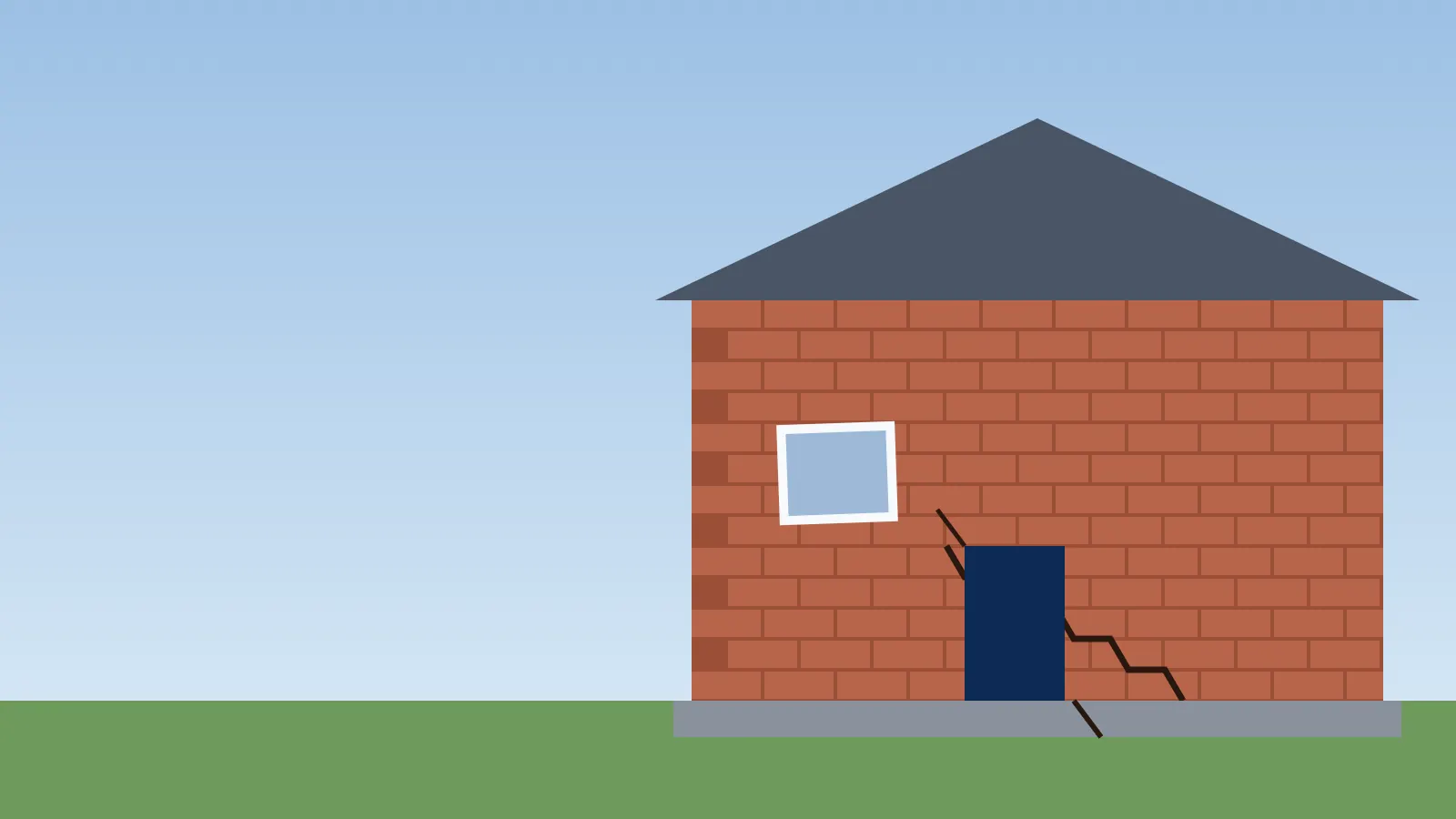
Many homes, especially in the South and West, sit on a concrete slab poured directly on the ground. When the soil beneath it shrinks, swells or washes away, the slab can crack, tilt or settle. Slab repair supports and levels the slab so the home stops moving.
Sifixit is a free referral service. Call the number on this page and you will be connected with an independent foundation repair provider where one serves your area. Calling costs nothing and you are never obliged to hire anyone.
Signs of slab foundation problems
These signs inside and outside the home can point to a moving slab.
- Cracks in tile floors or the slab itself
- Doors that stick or will not latch
- Cracks above doors and windows
- Floors that slope or feel uneven
- Gaps between walls and the floor or ceiling
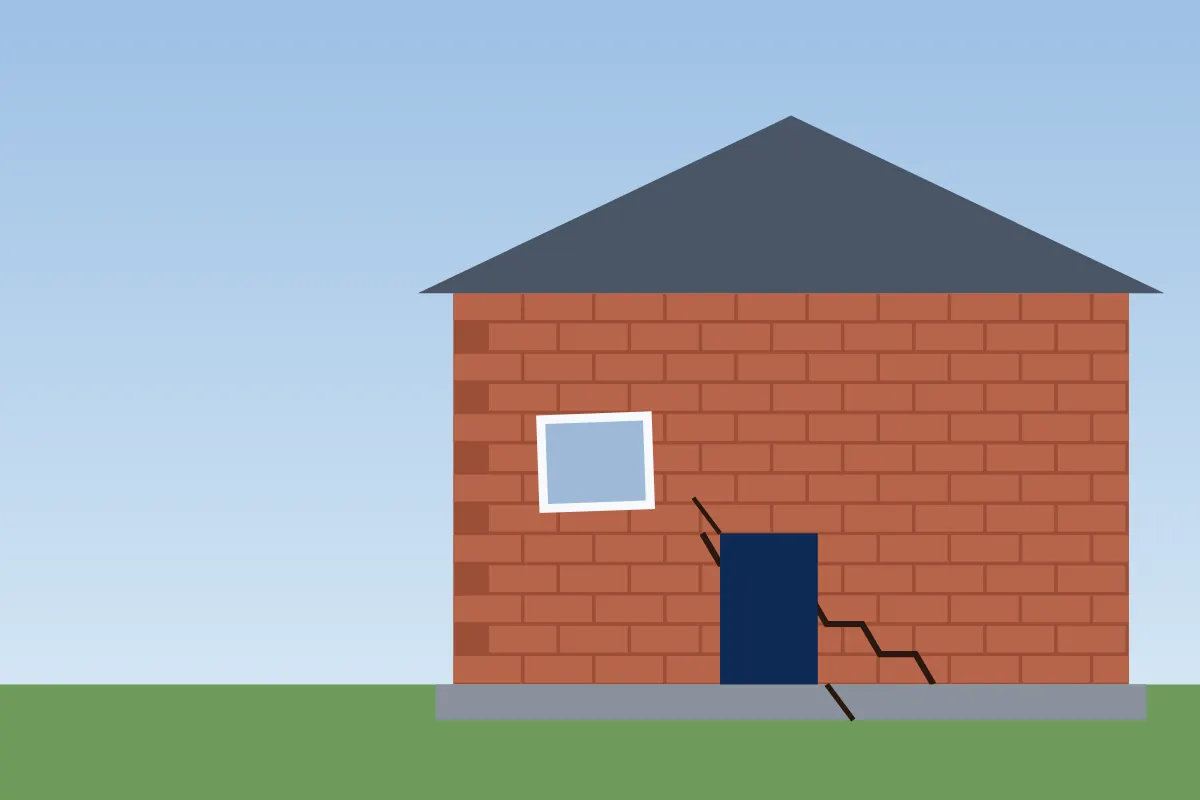
- Stair step cracks in brick outside
What to do right now
If cracks open quickly, doors jam suddenly or floors drop, keep people out of the area and call for an inspection right away.
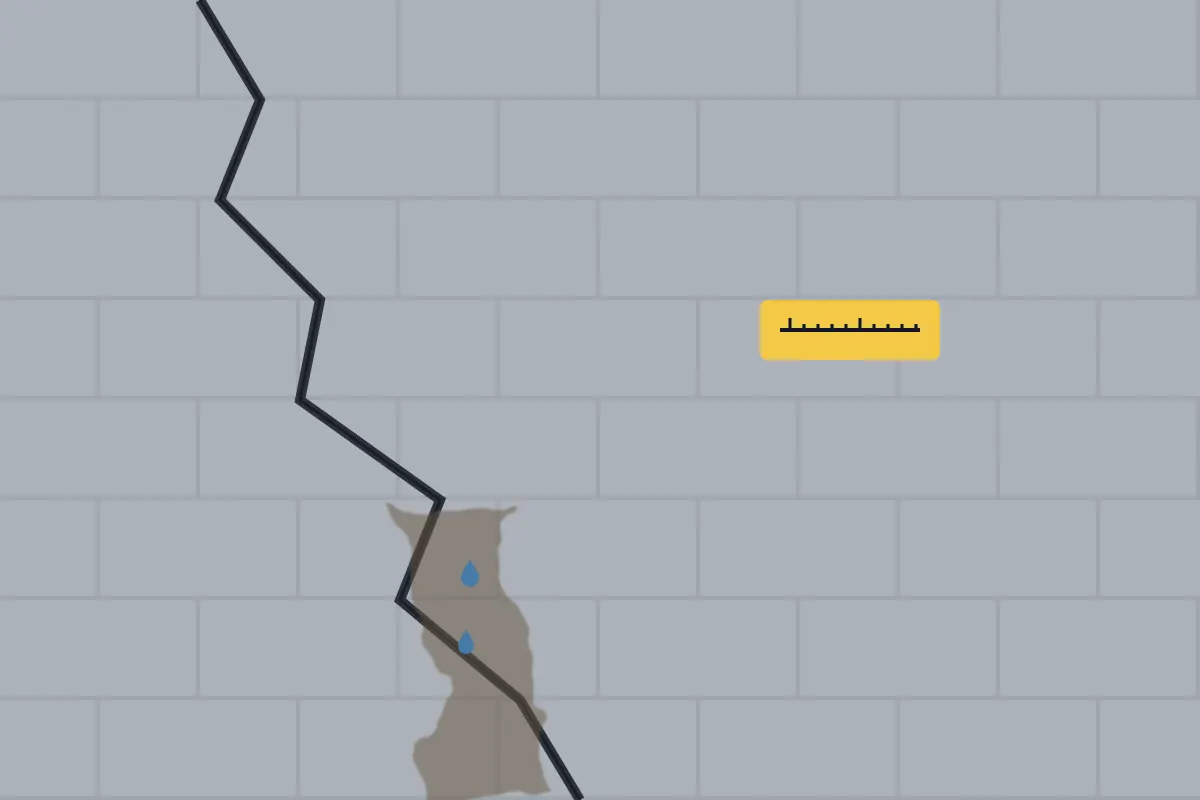
- Mark the ends of cracks with a pencil and the date
- Photograph cracks with a ruler for scale
- Check for a slab leak with your water meter
- Make sure gutters and downspouts carry water away
- Note doors and windows that stick
- Call for an inspection
How slab foundations are repaired
Pressed concrete piles
Stacked concrete cylinders pressed into the soil to support the slab. Common in many southern states.
Steel piers
Steel push piers or helical piers driven deep to stable soil or rock.
Slab leveling
Foam or grout injected under a slab to lift and fill voids, for smaller settling.
Drainage and moisture control
Correcting drainage and soil moisture so the slab does not move again.
How slab repair usually works
- The provider or an engineer measures floor levels and finds the cause.
- A repair plan sets the number and location of piers.
- Holes are dug along the edge or tunneled under the slab.
- Piers are installed and the slab is raised as close to level as is safe.
- A plumbing test may be done before and after, because lifting can stress pipes.
Things to know before repair
- An independent structural engineer’s opinion helps before large repairs
- Ask for a floor level survey before and after
- Lifting a slab can crack drywall or tile, which may need touch ups
- Ask whether the warranty transfers if you sell
- Fix drainage problems so the soil stays stable

Questions to ask before you hire
- What is causing the slab to move?
- Which pier type do you recommend, and why?
- Will you do a plumbing test before and after?
- Is an engineer’s report included?
- What warranty do you give, and does it transfer?
Frequently asked questions
How long does slab foundation repair take?
Many repairs take a few days, depending on the number of piers.
Will the floor be perfectly level after repair?
Not always. The goal is to stabilize the slab and raise it as close to level as is safe.
Can a slab leak cause foundation problems?
Yes. Water under the slab can soften or wash away soil and add to settling.
Does insurance cover slab repair?
Usually not for soil movement. Damage from a sudden covered event may be covered.
Learn more
Our main foundation repair guide covers the wider picture, including what affects the cost and when to call a professional.
Sifixit is a free referral service and does not provide home services. Calls may be answered by a partner call center or connected directly to independent local providers, who are solely responsible for their work, pricing, licensing and insurance.