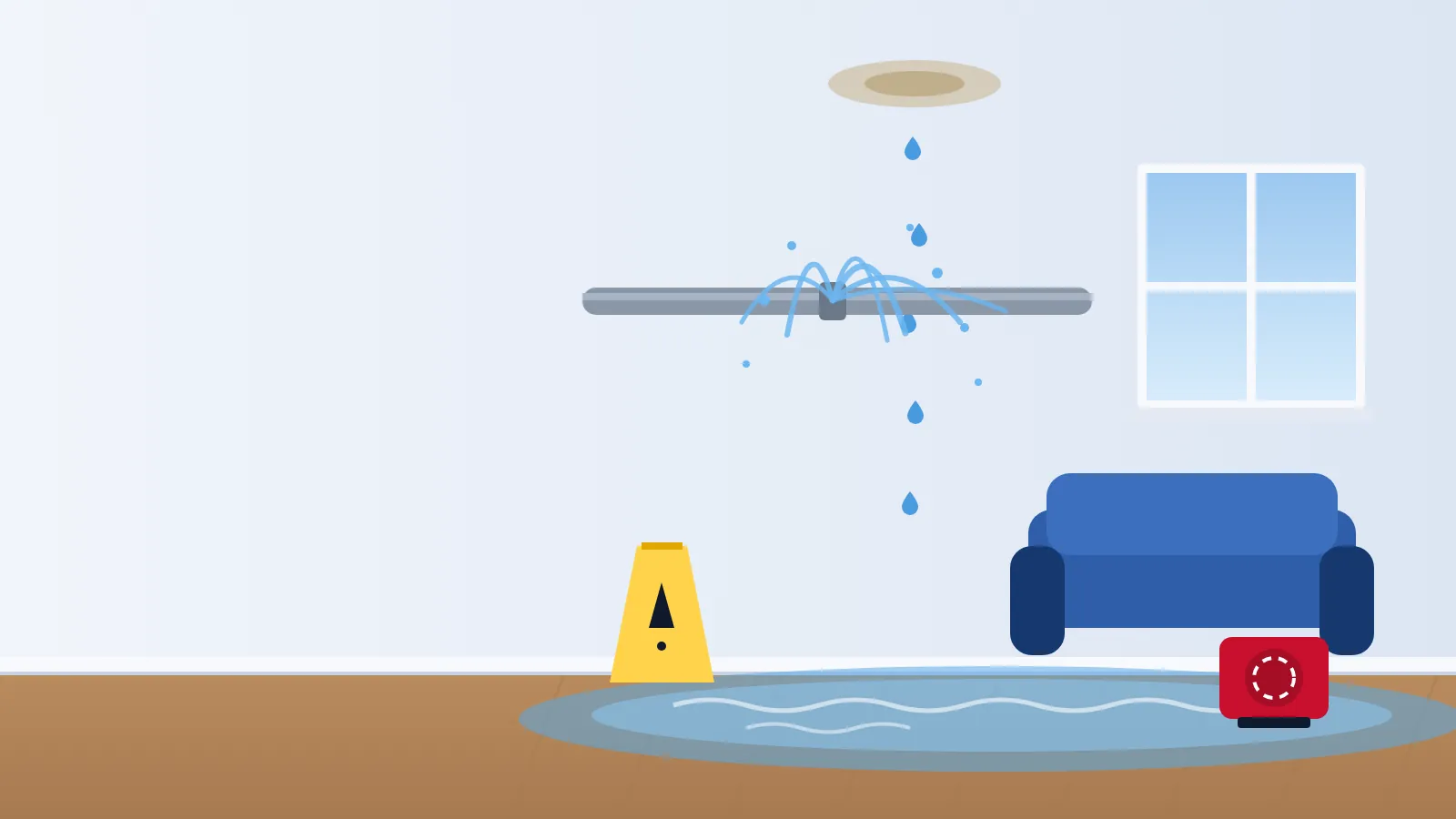
A burst pipe can release a surprising amount of water in a very short time, and it often happens when nobody is home or at night. Water soaks into floors, walls and ceilings below, and the damage keeps spreading until the supply is shut off and the structure is dried.
Sifixit is a free referral service. Call the number on this page and you will be connected with an independent water damage restoration provider where one serves your area. Calling costs nothing and you are never obliged to hire anyone.
Signs a pipe has burst
Some bursts are obvious. Others happen inside a wall or ceiling, where the first clue is a stain or a sound.
- Water spraying, pooling or dripping where it should not be
- The sound of running water when every tap is off
- A sudden drop in water pressure
- Stains, bulges or damp patches on walls or ceilings
- A water meter that keeps moving with everything turned off
- A water bill that jumps with no change in use
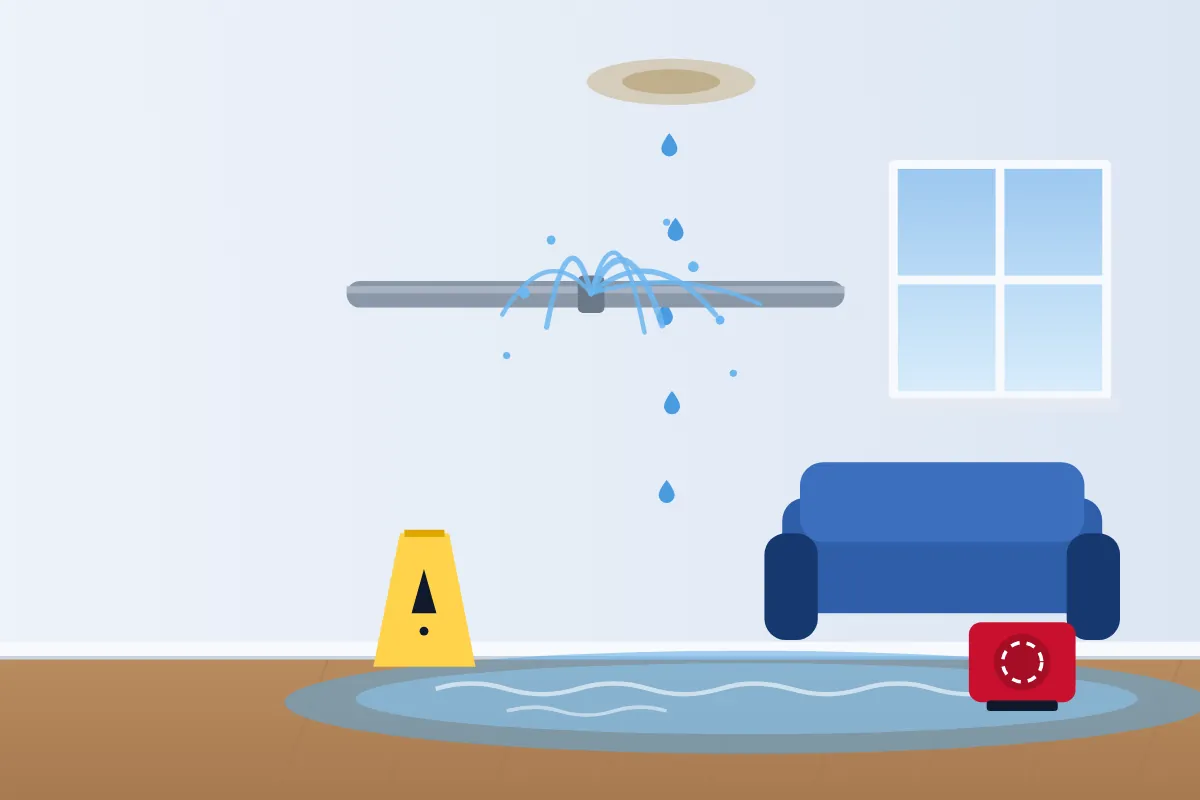
What to do right now
If water is near outlets, switches or the fuse box, do not step into it. Switch off the power at the main panel only if you can reach it safely and dry.
- Shut off the main water valve. It is usually where the water line enters the home, often near the water heater, in a garage or in a basement.
- Turn off the water heater, or switch it to vacation mode, once the water is off.
- Open cold taps on the lowest floor to drain water left in the pipes.
- Move rugs, electronics and furniture out of the wet area.
- Take photos and video before you clean anything, for your insurer.
- Call a plumber to repair the pipe and a restoration provider to dry the home.
Why pipes burst
Freezing
Water expands as it freezes, which builds pressure inside the pipe. Pipes in attics, crawl spaces, garages and outside walls are most at risk.
Corrosion and age
Older galvanized and copper pipes can thin out over time, until a weak spot finally gives way.
High water pressure
Pressure that is too high strains pipes, joints and appliance hoses. A plumber can test it and fit a pressure reducing valve.
Failed supply lines
Rubber hoses on washing machines, toilets and sinks wear out. Braided stainless steel lines last much longer.
How a professional handles it
- A plumber finds and repairs the damaged pipe so water can be turned back on safely.
- The restoration provider pumps out or extracts standing water.
- Moisture meters and thermal cameras show where water has spread inside walls and floors.
- Soaked drywall, insulation and carpet pad that cannot be dried are removed.
- Air movers and dehumidifiers run, usually for several days, until moisture readings are back to normal.
- Repairs such as new drywall, paint and flooring are done once everything is dry.
How to stop it happening again
- Insulate pipes in attics, crawl spaces, garages and outside walls
- Keep the heat on when you are away in cold weather
- Let a trickle of water run from taps on exterior walls during a hard freeze
- Disconnect garden hoses before winter
- Replace rubber appliance hoses with braided steel lines
- Learn where your main shut off valve is and check that it turns
Questions to ask before you hire
- Can you find where the water has spread inside the walls and floor?
- How many days of drying do you expect, and will you show me the moisture readings?
- Which materials do you need to remove, and why?
- Will you work with my insurance company and document the damage?
- Is the repair work quoted separately from the drying?
Frequently asked questions
Does insurance cover a burst pipe?
Sudden and accidental damage from a burst pipe is commonly covered by homeowners insurance. Damage from a slow leak that went on for a long time often is not. Call your insurer early and keep your photos.
How long does it take to dry out after a burst pipe?
It depends on how much water there was and what got wet. Drying is finished when the moisture readings are back to normal, not when the surface feels dry.
Can I use the water after a pipe bursts?
Not until the pipe is repaired. Keep the main valve off until a plumber has fixed the break.
Will I get mold after a burst pipe?
Mold can begin to grow on damp materials within 24 to 48 hours, according to the Environmental Protection Agency. Fast, thorough drying is the best way to prevent it.
Learn more
Our main water damage restoration guide covers the wider picture, including what affects the cost and when to call a professional.
Sifixit is a free referral service and does not provide home services. Calls may be answered by a partner call center or connected directly to independent local providers, who are solely responsible for their work, pricing, licensing and insurance.